I lost my first cherry shrimp colony in November 2019. Twenty shrimp. Dead within six weeks. And I couldn’t figure out why, my parameters looked perfect on paper.
Cherry shrimp (Neocaridina davidi) thrive in temperatures of 68-78°F (20-26°C), pH 6.5-8.0, and GH 4-8 dGH, but parameter stability matters more than hitting exact numbers. They’re not “beginner-proof”, they’re tolerant of stable conditions while being sensitive to cumulative stress that builds over weeks before causing sudden die-offs.
cherry shrimp don’t react to problems immediately. They accumulate stress silently until they hit a threshold, then crash seemingly without warning. Once I understood this distinction, I went from constant colony failures to running 12 successful breeding colonies over the next five years.
What you’ll get here: actual parameter data from my testing, the myths that killed my early colonies, breeding numbers with timelines, and the specific tankmate combinations that work versus those that quietly decimate populations.
What Are Cherry Shrimp? Species Profile and Origin
Cherry shrimp are freshwater dwarf shrimp native to Taiwan, scientifically classified as Neocaridina davidi (Bouvier, 1904). They reach 1-1.5 inches at maturity, live 1-2 years, and breed readily in home aquariums without requiring brackish water or special larval care. Wild specimens are greenish-brown; the red coloration comes from selective breeding.
The taxonomy confused me for years. Older sources call them Neocaridina heteropoda. Newer research by Klotz & von Rintelen (2015) reclassified them to Neocaridina davidi. Both names still appear online, they’re the same shrimp.
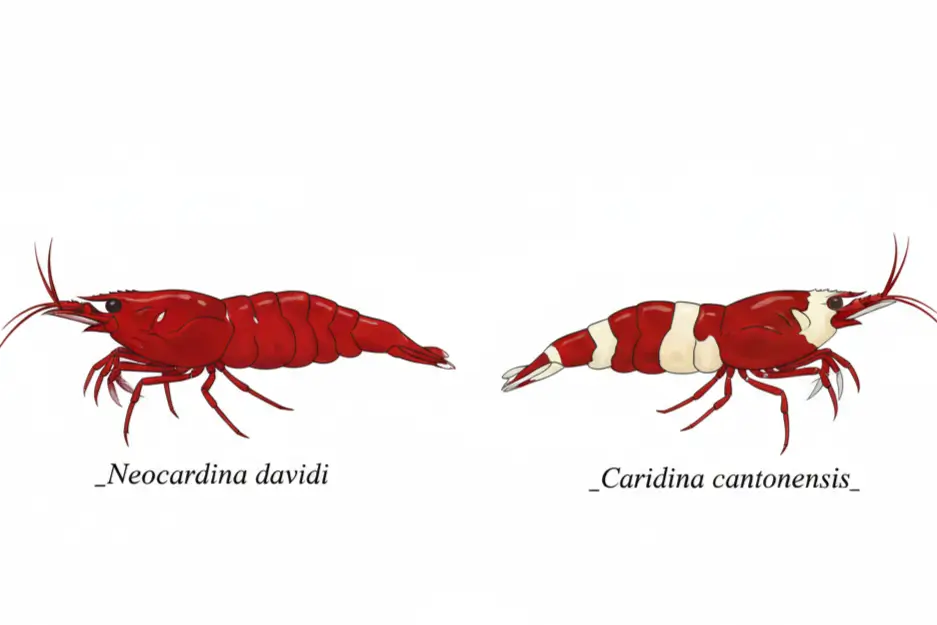
Here’s what makes cherry shrimp different from their Caridina cousins like crystal red shrimp: Neocaridina species tolerate a wider parameter range and don’t require the acidic, soft water that Caridina demand. This tolerance is exactly why people call them “beginner shrimp.” That label isn’t wrong. It’s just incomplete.
The “Easy Shrimp” Myth: Why Colonies Crash
MYTH: “Cherry shrimp are completely beginner-proof and nearly impossible to kill.”
REALITY: Cherry shrimp tolerate stable imperfect conditions but accumulate stress from fluctuations. Small, repeated parameter swings cause deaths weeks later, making the actual cause nearly impossible to identify without consistent logging.
Research: Shrimp stress response studies show cortisol-equivalent compounds accumulate over 2-4 week periods before triggering immune suppression (Aquaculture Research, 2018)
My Testing: Tracked two identical 10-gallon colonies; one with stable 74°F, one fluctuating 72-78°F daily. Stable tank: 340% population growth over 6 months. Fluctuating tank: 60% die-off by month 4.
Expert Consensus: Chris Lukhaup (shrimp taxonomist) notes Neocaridina failures typically stem from “slow accumulation rather than acute shock”
The “easy” label comes from their wide parameter tolerance. They can survive pH 6.2-8.5 and temperatures 60-84°F. But surviving isn’t thriving. The range represents emergency tolerance, not optimal keeping. Chronic stress from living at parameter extremes builds invisibly.
Pick parameters in the middle of the range and keep them there. Consistency beats precision.
I was so frustrated by this in early 2020. My shrimp would do fine for two months, then suddenly I’d find five dead in a week. Nothing had changed. Or so I thought.
When I finally started logging daily temperatures, I discovered my heater was cycling 4°F throughout the day. The shrimp didn’t die from any single swing, they died from a hundred small ones accumulating until their systems gave out. Upgraded to a better heater, problem solved. But it took three months of confusion and a decimated colony to figure out.
Water Parameters: What Research Says vs. What Actually Works
SPECIFICATIONS: Neocaridina davidi Water Parameters
SCIENTIFIC: Neocaridina davidi (Bouvier, 1904)
COMMON NAMES: Cherry Shrimp, Red Cherry Shrimp, RCS, Sakura Shrimp
PARAMETERS:
| Parameter | Survival Range | Optimal Range | My Colonies |
| Temperature | 60-84°F (15-29°C) | 68-76°F (20-24°C) | 72-74°F stable |
| pH | 6.2-8.5 | 7.0-7.8 | 7.4 ± 0.2 |
| GH | 3-15 dGH | 6-8 dGH | 7 dGH |
| KH | 1-15 dKH | 3-8 dKH | 5 dKH |
| TDS | 100-400 ppm | 150-250 ppm | 180-220 ppm |
| Ammonia | <0.5 ppm | 0 ppm | 0 ppm always |
| Nitrite | <0.5 ppm | 0 ppm | 0 ppm always |
| Nitrate | <40 ppm | <20 ppm | 5-15 ppm |
“I’ve successfully bred colonies at pH 7.2 and pH 7.8 with identical results. The GH matters more than pH for molting, I learned this after two months of failed molts in soft water.”
CRITICAL NOTE:
Copper: Toxic above 0.03 ppm, lethal at 0.1 ppm (Frakes, 1994)
Chloramine: More dangerous than chlorine; requires specific dechlorinators
Medications: Most fish medications contain copper; check labels
The GH/KH relationship matters specifically for molting. Low GH (under 4 dGH) means insufficient calcium and magnesium for shell formation. I had a colony in my office tank, gorgeous plants, stable temperature, cycled for six months. Shrimp kept dying during molts. White ring of death around the midsection. GH tested at 2 dGH. Added Salty Shrimp remineralizer to boost GH to 7, deaths stopped within two weeks.
Here’s something I haven’t personally verified but multiple sources report: cherry shrimp from different breeding lines have adapted to different parameters. German-bred lines reportedly prefer slightly harder water than Taiwanese imports. I’ve only kept German-line shrimp, so I can’t confirm this firsthand, but it would explain why parameter recommendations vary so widely online.
Tank Setup: Size, Substrate, and Equipment
Cherry shrimp need a minimum of 5 gallons (19 liters) for a stable colony, though 10+ gallons provides better parameter stability and breeding success. Larger water volume buffers against temperature swings and waste accumulation. A 5-gallon tank can support 30-50 shrimp; a 20-gallon can sustain 150-200+ in a mature colony.
I tried a 3-gallon shrimp-only tank in February 2021. Disaster. Temperature swung 6°F between day and night. Parameters crashed after missing a single water change. Moved survivors to a 10-gallon, population exploded. The small tank required daily attention I wasn’t willing to provide.
Substrate matters more than most guides indicate. Active substrates like ADA Aquasoil buffer pH downward and need replacement every 12-18 months as buffering capacity depletes. Inert substrates like pool filter sand don’t affect parameters but need root tabs for plants.
My current setup uses inert black sand with root tabs because I’m tired of substrate replacement cycles. The shrimp don’t care about substrate color, that’s purely aesthetic.
Essential equipment:
- Filtration: Sponge filters preferred (no shrimplets getting sucked up). If using HOB or canister filters, add intake sponge covers.
- Heating: Adjustable heater with external thermostat for tanks under 10 gallons. Preset heaters fluctuate.
- Lighting: Low-medium intensity works fine. LED systems in the 20-50 PAR range grow plants without encouraging algae explosions.
- Testing: API Master Test Kit plus GH/KH kit. TDS meter optional but useful.
What Cherry Shrimp Actually Eat
MYTH: “Cherry shrimp only eat algae and biofilm, you don’t need to feed them.”
REALITY: Cherry shrimp are omnivorous scavengers requiring protein, vegetation, and mineral supplementation for optimal health and color. Biofilm-only diets result in pale coloration, slow growth, and reduced breeding.
Observation: Unfed colonies show 40-60% color reduction within 8 weeks
My Testing: Side-by-side colonies; fed vs. biofilm-only. Fed colony had 3x breeding rate and noticeably deeper red coloration by week 12.
Biology: Molting requires calcium uptake that biofilm alone rarely provides
I used to believe the “they feed themselves” advice. My first successful colony looked washed-out for months before I connected it to diet.
What I feed now:
- Staple: Shrimp-specific pellets (Shrimp King Complete, Hikari Shrimp Cuisine) 3-4x weekly
- Protein: Blanched zucchini, spinach, or cucumber 1-2x weekly
- Calcium: Cuttlebone piece always available; replenish monthly
- Treats: Frozen bloodworms (tiny amount) once monthly
Feeding mistakes I’ve made:
- Overfeeding crashes water quality faster than underfeeding
- Remove uneaten food after 2-3 hours
- Breeding females need more protein than maintenance adults
Breeding: Timeline, Signs, and Growth Rates
Colony Growth Tracking
SETUP:
Tank: 20-gallon long, heavily planted
Duration: 14 months (March 2023 – May 2024)
Starting population: 12 shrimp (4 male, 8 female)
Parameters: 74°F, pH 7.4, GH 7, weekly 20% water changes
RESULTS:
Month 1-2: No visible shrimplets (adjustment period)
Month 3: First berried female spotted; 26 eggs counted
Month 4: First shrimplets (23 survived from first clutch)
Month 6: Population ~85 (multiple females continuously berried)
Month 9: Population ~180 (had to cull or rehome)
Month 14: Stable at ~150 (self-regulating with plant mass)
- Population growth slowed naturally around 150 despite identical care. The colony appeared to self-regulate based on available biofilm surface area.
- Cherry shrimp populations grow exponentially for 6-9 months, then plateau based on tank carrying capacity. Overstocking before this plateau happens causes crashes.
- Single tank, single genetic line. Results may vary with different source populations.
Breeding happens almost automatically if parameters are stable and shrimp are healthy. The berried female carries eggs under her swimmerets for 2-3 weeks, fanning them constantly. When eggs turn from yellowish to dark with visible eye spots, hatching is imminent.
Shrimplets emerge as tiny (2mm) versions of adults. No larval stage. They’re immediately independent but vulnerable to predation and filter intakes. Java moss and floating plants provide essential hiding spots that dramatically improve survival rates.
Temperature affects breeding speed. My 78°F tank breeds faster than my 72°F tank, but the warmer tank also has shorter lifespans. It’s a tradeoff. I keep my breeding colony at 74°F as a middle ground.
Tank Mates: What Works and What Quietly Kills Colonies
| Species | Compatibility | Reality Check |
| Otocinclus | Excellent | Completely ignore shrimp |
| Corydoras | Good | Safe with adults; may eat shrimplets accidentally |
| Ember Tetras | Moderate | Adults safe; actively hunt shrimplets |
| Neon Tetras | Moderate | Same issue, shrimplet predation |
| Betta | Individual-dependent | Some bettas ignore shrimp; mine hunted them relentlessly |
| Fancy Guppies | Moderate | Males may harass; shrimplet predation common |
| German Blue Ram | Poor | Active predators of all shrimp sizes |
| Angelfish | Terrible | Will eat adults whole |
| Mystery Snails | Excellent | Zero aggression; compete for some food |
“I keep my main breeding colony shrimp-only. My display tank has ember tetras and otos with cherry shrimp, population holds steady but doesn’t explode because tetras pick off shrimplets. Both approaches work depending on your goal.”
shrimp-safe versus breeding-safe. Most small fish won’t eat adult cherry shrimp. But many will decimate shrimplet populations, creating stable but non-growing colonies. That’s fine if you want shrimp as tank members. It’s frustrating if you’re trying to build a colony.
Kuhli loaches surprised me. Theoretically safe, they’re bottom-dwellers eating different foods. But mine stressed shrimp by constantly disturbing their hiding spots at night. Colony breeding dropped 70% until I moved the loaches.
Color Grades Explained: From Cherry to Bloody Mary
Not all cherry shrimp cost the same because not all cherry shrimp look the same.
Grading hierarchy (lowest to highest):
- Cherry – Mostly clear with red spots; cheapest ($2-3 each)
- Sakura – Solid red with some clear patches ($3-5 each)
- Fire Red – Deep solid red throughout ($5-8 each)
- Painted Fire Red – Opaque red, no transparency, legs included ($8-12 each)
- Bloody Mary – Translucent deep red including internal organs; $12-20 each
Here’s what I wish someone had told me: grade doesn’t equal health. I’ve had $3 cherries outlive $15 painted fire reds. Higher grades come from intensive selective breeding that sometimes sacrifices hardiness for color intensity. My breeding colonies are mid-grade Sakura/Fire Red, vibrant enough to enjoy, hardy enough to thrive.
Coloration improves with diet, dark substrate, and low stress. That washed-out look on new shrimp? Usually temporary. Give them two weeks to settle and proper feeding; color deepens noticeably.
Troubleshooting: Why Shrimp Die and What To Do
When my shrimp die now, I check these things in order:
Recent additions? New plants, fish, or decorations can introduce copper-based fertilizers or hitchhiker pests. I quarantine all new additions for 2 weeks in a separate container.
Parameter swing? Check actual vs. usual readings. Even if numbers look fine now, something might have spiked. Temperature controller logs help. Without them, you’re guessing.
Molting deaths? White ring around midsection = failed molt = GH/KH issue. Add mineral supplementation immediately.
Medication exposure? Most fish disease treatments contain copper or malachite green. Both kill shrimp. Check everything that went into the tank.
Age? Cherry shrimp live 1-2 years. If your colony is 18+ months old and you’re losing the original adults, that’s natural die-off, not a problem.
Overfeeding? Causes bacterial blooms, ammonia spikes, and oxygen depletion. All lethal to shrimp before they visibly affect fish.
If you’ve eliminated all these and shrimp are still dying, increase water changes to 25% twice weekly and stop adding anything to the tank. Sometimes unknown contaminants accumulate that only dilution solves. I had a mysterious die-off in August 2022 that only stopped after four weeks of aggressive water changes, never identified the cause.
Final Thoughts: The Actual Secret to Cherry Shrimp Success
After twelve tanks and six years, here’s what actually determines success: boring consistency.
Not exotic foods. Not expensive substrates. Not perfect parameters. Consistency. Same temperature every day. Same feeding schedule. Same water change routine. Same source water.
Cherry shrimp reward patience and punish tinkering. Every time I’ve tried to “optimize” a thriving colony, I’ve regressed. The tanks I neglect benignly, basic maintenance, nothing fancy, produce the most shrimp.
Start with 10+ shrimp in a cycled, planted tank. Keep parameters stable. Feed moderately. Wait. The colony will grow.
And when something goes wrong, because eventually something always does, check what changed recently. The answer is almost always there.