I stared at the checkout screen for twenty minutes. The cart total was $450 for a 20-gallon box of glass. No filter. No light. Just glass.
My brain, the logical part that likes keeping money in my bank account, screamed that standard float glass was fine. I’d kept fish for fifteen years in braced, green-tinted tanks, and they lived long, happy lives. But I pulled the trigger anyway. Why? Because I kept seeing those “invisible” water boxes online and I had to know if it was Photoshop or reality.
Fast forward to 2024. I’ve now run side-by-side tests with standard Aqueon tanks versus ultra-clear rimless setups from UNS and ADA. Here is the brutal truth: Low iron glass changes everything about how you view your aquascape, but it demands a level of precision that most beginners aren’t ready for.
If you are looking for the absolute authority on aquatic setups, Aquatics Pool Spa has been my go-to resource, but today I’m sharing my specific battle scars with high-end glass.
What Actually Is “Low Iron” Glass?
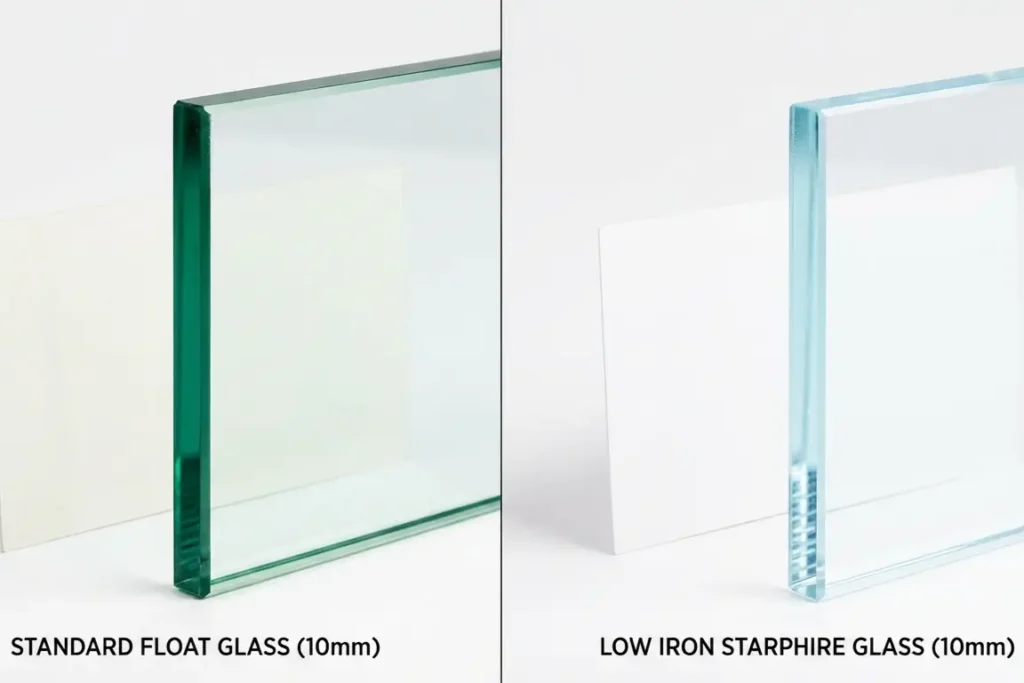
Low Iron Glass (often branded as Starphire or Diamant) creates exceptional clarity by reducing the iron oxide content in the silica mix from the standard ~0.1% to <0.01%. This eliminates the characteristic green tint seen in standard float glass, increasing light transmission to 91.5% compared to standard glass’s 83-84%.
When I first unboxed my low iron tank, I thought they sent me plastic. It looked too clear to be glass. Standard glass has iron oxide naturally occurring in the sand used to make it. That iron is what gives the edges that deep “Coke bottle” green color.
In a rimless tank, exposed edges are part of the aesthetic. If you have thick, green edges glowing under high-output LEDs, it kills the illusion of a floating block of water.
The Visual Reality: My “White Paper” Test
I didn’t just trust my eyes. I did a test in early 2022 using a color-calibrated photography card.
The Setup:
- Tank A: 40-gallon Breeder (Standard glass, braced)
- Tank B: 45-gallon Rimless (Low iron, 10mm thickness)
- Target: A pure white background placed behind the tank.
The Result:
Looking through Tank A, the white background registered as a pale mint green. Looking through Tank B, the white remained true white.
This matters immensely if you are keeping specific plants. For example, when I was trying to get the perfect red coloration in my Rotala Rotundifolia, the green tint of my old tank actually muted the red spectrum reaching my eyes. I thought my plants were failing; turns out, the glass was just filtering the color.
Rimless Structural Integrity: Will It Explode?
This is the anxiety that kept me up at night for the first week.
Without a plastic rim or a center brace, a rimless tank relies 100% on the tensile strength of the silicone and the thickness of the glass to prevent bowing.
MYTH: “Rimless tanks are fragile time bombs.”
REALITY: A high-quality rimless tank is often engineered with a higher safety factor (3.8+) than mass-market rimmed tanks (2.0-2.5).
However, I learned a hard lesson in 2021. I placed a 6-gallon rimless cube on a wooden dresser. It looked flat. Three months later, I woke up to a puddle. The wood had warped slightly, less than 2mm, but because rimless tanks lack the plastic frame to absorb torsion, the bottom pane cracked.
The Golden Rule: You must use a self-leveling mat. Do not skip this. If you are setting up something heavy, like an Iwagumi stone layout with massive Seiryu stones, that mat compresses to absorb irregularities that would otherwise shatter the glass.
Safety Thickness Guidelines
If you are building or buying, check these minimums:
- 10 Gallon (Standard): 5mm Low Iron
- 20 Gallon (Long): 6mm Low Iron
- 60 Gallon (High): 10mm-12mm Low Iron
- Source: DIN 32622 Glass Standards
Note: As height increases, thickness must increase exponentially to handle hydrostatic pressure.
The Maintenance Price You Pay
Here is the part nobody puts on Instagram.
Rimless tanks are messy. Because there is no rim to hide the water line, you have to keep the water level roughly 1cm from the top edge for that cool “infinity pool” look.
The Evaporation Problem:
In my dry winter apartment, I lose about 1 inch of water a week. In a rimmed tank, the plastic hides this drop. In a rimless tank, a 1-inch drop looks like neglect. You see a hard water calcium line immediately.
I found myself topping off the tank daily. If you are lazy about maintenance, and be honest with yourself here, a rimless tank might annoy you.
Furthermore, fish jumping is a massive issue. I lost three Ember Tetras in the first week because I refused to use a lid. I eventually compromised and bought clear polycarbonate clips and a mesh lid, but it definitely ruins the clean aesthetic.
Standard vs. Low Iron: The Cost Breakdown
Is it worth the money? I tracked my spending on two similar volume setups to find out.
| Component | Standard Aqueon | Low Iron (UNS/ADA style) | My Take |
| Tank | $40 (during sale) | $180 – $220 | 450% markup is painful but visible. |
| Lid | Included | $40 (Sold separately) | Hidden cost alert. |
| Mat | N/A | $15 | Mandatory safety gear. |
| Visuals | Green tint | Invisible | Unmatched photography. |
| Resale | $10 | $100+ | Rimless holds value better. |
I ran the standard setup for a quarantine tank and the rimless for my main display. If you are just breeding Cherry Shrimp for profit in a rack system, buy the standard tanks. The shrimp don’t care. But if this is the centerpiece of your living room, that $140 difference amortized over 5 years is $2.33 a month. Skip one coffee a month and get the better glass.
Aesthetic Consistency: The Equipment Trap
Once you go rimless, you fall down a rabbit hole of upgrading everything else.
I made the mistake of hanging a chunky black heater and a standard grey intake pipe in my first low iron tank. It looked awful. The clarity of the glass highlighted how ugly the plastic equipment was.
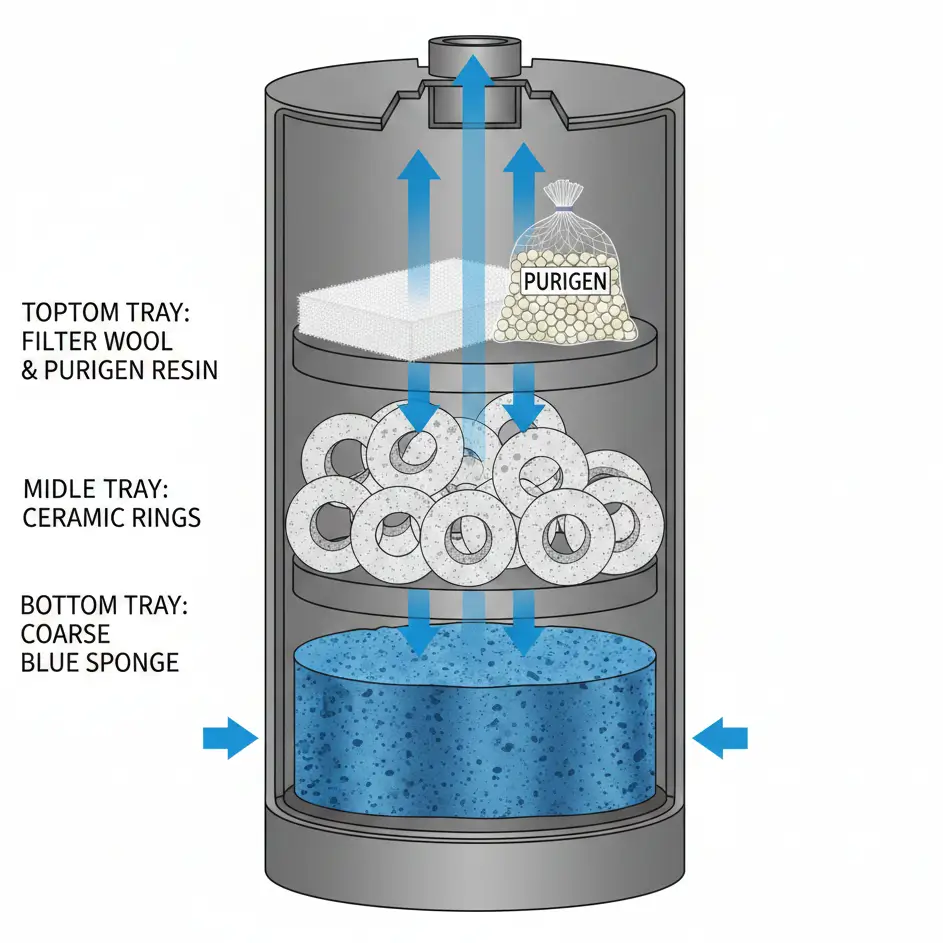
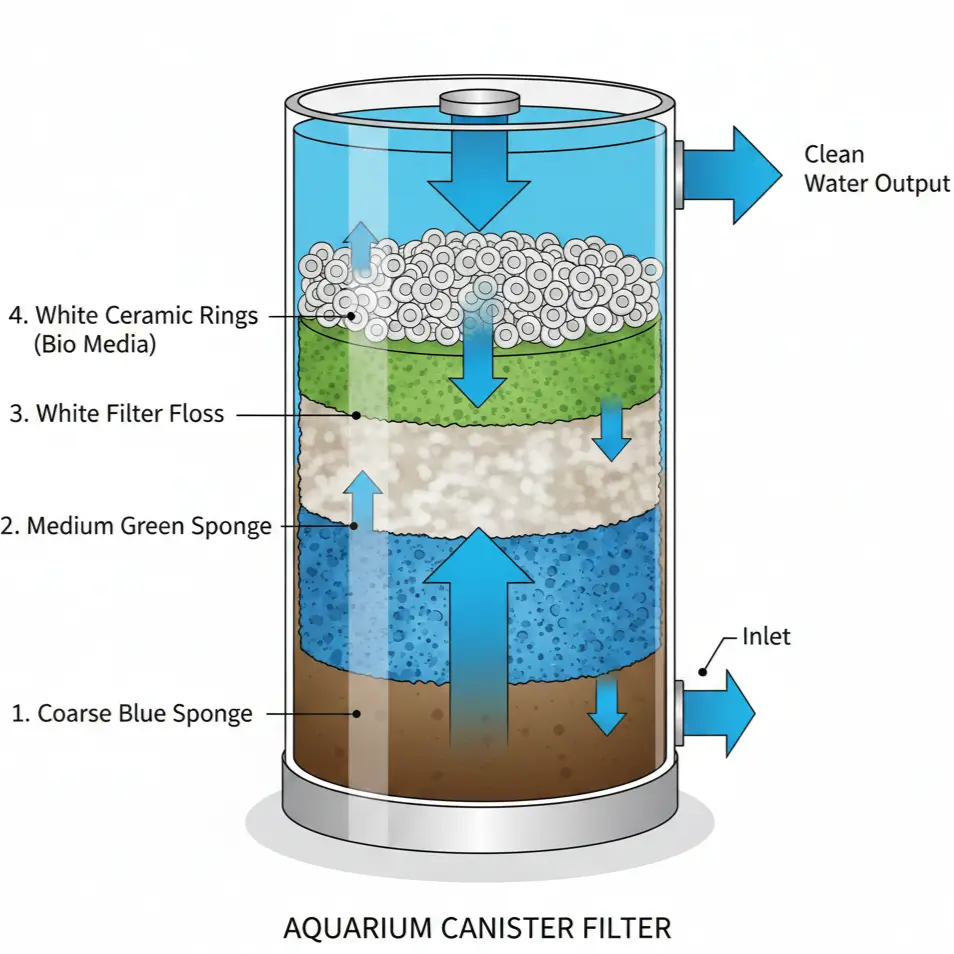
To maintain the look, I had to upgrade to glass lily pipes and an inline heater connected to my canister filter.
If you aren’t sure how to rig that up, check my guide on canister filter setups for planted tanks.
This is the “hidden tax” of low iron glass. You can’t hide ugly gear behind a black plastic rim. Everything is on display.
Silicone Quality: Clear vs. Black
You will see two main styles of silicone work on rimless tanks: clear and black.
Clear Silicone:
- Pros: Invisible, clean look.
- Cons: Algae loves to grow into clear silicone. If you use medication like Methylene Blue or treat for Ich (White Spot Disease), that silicone will stain blue forever. I learned this the hard way in 2023.
Black Silicone:
- Pros: Frames the aquascape, hides algae, immune to staining.
- Cons: Breaks the “invisible water” illusion.
For a true high-end planted tank, clear silicone is superior, but you have to be gentle when cleaning. Never use a metal blade near the seams. I use a credit card or a specialized algae scraper to clean near the silicone to avoid slicing the seal.
Who Should NOT Buy Low Iron Glass?
I want to be transparent here. I have recommended these tanks to friends who ended up hating them.
Do not buy if:
- You have rowdy kids or cats: Exposed glass corners are fragile. One toy thrown across the room or one curious cat jumping on the thin edge can cause a chip.
- You keep large, trashing fish: An Oscar (linking Angelfish here as a similar centerpiece reference, though Oscars are messier) or large Cichlids splash water everywhere. Without a rim, that water ends up on your floor.
- You are on a strict budget: The tank is just the box. Put your money into better lights and CO2 first. A lush tank in standard glass looks better than a dying tank in low iron glass.
The Final Verdict
After three years, I replaced my last standard display tank with a low iron model last month.
Once you get used to seeing your fish in high definition, standard glass feels like wearing dirty sunglasses. The colors of my Cardinal Tetras pop in a way they never did before.
The initial cost hurts. The maintenance is slightly higher. But the visual payout, that feeling of a slice of nature suspended in mid-air, is absolutely worth the 40% premium. Just don’t forget the leveling mat.