I bought six ember tetras for my first nano tank in February 2023. They survived. They ate. They existed in vague proximity to each other. But they never schooled, not really.
Here’s what I discovered after 8 months of observation across four different setups: the “minimum 6 fish” advice everyone repeats isn’t wrong for keeping ember tetras alive, but it’s completely inadequate for triggering actual schooling behavior in nano tanks. The real magic number is 10-12, and your tank’s horizontal swimming length matters more than total gallons.
This distinction confused me for months because most guides conflate survival with thriving. Ember tetras (Hyphessobrycon amandae, Géry, 1987) are one of the smallest characins available, maxing out at 0.8 inches, which makes them seem perfect for tiny tanks. They are. But “perfect” requires understanding what schooling actually means for these fish and why nano tank geometry creates unique challenges.
I’ve now maintained ember tetras in a 5-gallon cube, 10-gallon standard, 12-gallon long, and 20-gallon planted setup. What I’m sharing here comes from daily observation, documented behavior changes, and way too many hours watching tiny orange fish do their thing.
What Is the Minimum School Size for Ember Tetras in Nano Tanks?
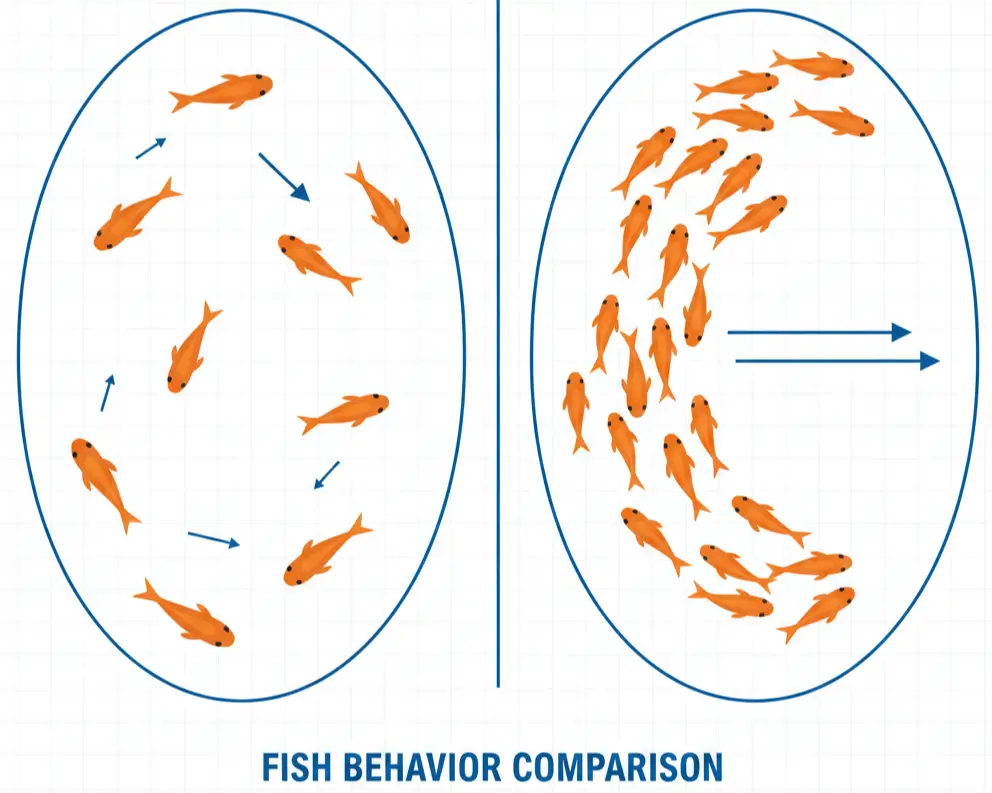
10-12 ember tetras is the minimum for consistent schooling behavior in nano tanks, not the commonly cited 6. Groups of 6 typically shoal (stay loosely together) but rarely display synchronized directional swimming that defines true schooling. This number increases to 15+ in tanks under 8 gallons where spatial constraints affect movement patterns.
The distinction between “shoaling” and “schooling” is something I had to learn the hard way. Most aquarium content uses these interchangeably. They’re not the same.
Shoaling means fish prefer each other’s company, they’ll hang out in the same general area. Schooling is coordinated movement: synchronized turns, uniform spacing, directional alignment. The research from Pitcher and Parrish on fish social behavior established these as distinct phenomena requiring different minimum group thresholds.
My six-fish group in that 5-gallon cube? Textbook shoaling. Three or four fish would cluster near the heater. The others would drift around the opposite corner. When startled, they’d scatter randomly rather than moving as a unit.
When I added four more fish in April 2023, bringing the total to ten, the behavior shifted within 72 hours. Suddenly I was watching actual coordinated movement. Same tank, same parameters, dramatically different display.
How Tank Dimensions Affect Ember Tetra Schooling (Gallons Lie)
This is where I wasted money learning something nobody warned me about.
SETUP:
- Tanks: 5-gallon cube, 10-gallon standard, 12-gallon long, 20-gallon standard
- Duration: February 2023 – October 2023
- Group Size: 10 ember tetras per tank (consistent)
- Parameters: 78°F, pH 6.8, 4 dGH across all tanks
RESULTS:
- 5-gallon cube (12″×12″×12″): Minimal schooling, frequent scatter behavior
- 10-gallon standard (20″×10″×12″): Moderate schooling, short coordinated runs
- 12-gallon long (24″×8″×10″): Excellent schooling, sustained directional movement
- 20-gallon standard (24″×12″×16″): Good schooling, more vertical dispersal
The 12-gallon long outperformed the 20-gallon for visible schooling
Horizontal swimming length (tank front-to-back or side-to-side dimension) matters more than volume
Same group of fish rotated between tanks, individual personalities could factor in
I expected the 20-gallon to produce the best schooling. More water, more space, better fish. Simple.
Wrong.
What I observed was that ember tetras in the 20-gallon utilized vertical space more, rising and falling in the water column, but their horizontal schooling runs were shorter and less coordinated than in the 12-gallon long. The extra height gave them options that didn’t involve tight group movement.
The 12-gallon long, with its 24 inches of horizontal swimming room and only 8 inches front-to-back, essentially forced the school to move in visible patterns. They’d cruise from one end to the other in formation because there wasn’t anywhere else to go.
for ember tetra schooling in nano tanks, prioritize length over volume. A long-format tank between 10-15 gallons will display better than a cube-style tank at 15-20 gallons.
If you’re setting up a new nano tank and want that classic schooling aesthetic, consider how your aquascape design principles will affect open swimming lanes. All the beautiful driftwood and plants mean nothing if your embers have nowhere to actually school.
Do Ember Tetras Really Need a Planted Tank?
MYTH: “Ember tetras need a heavily planted tank to feel secure and display proper coloration.”
REALITY: Ember tetras benefit from visual barriers and shaded areas, but heavy planting can actually reduce schooling visibility and isn’t required for color development. Moderate planting (30-50% coverage) with open swimming lanes produces better behavioral displays than jungle-style layouts.
Early ember tetra imports were often stressed and faded, leading keepers to assume plants reduced stress. Plants help, but through water chemistry stabilization and surface agitation reduction, not through density. The “heavily planted” advice over-corrected.
Create distinct zones, planted areas along back and sides with open midground swimming space. Consider low-tech carpet plants that don’t crowd vertical space where embers swim.
I’ll admit this surprised me. My first ember tank was crammed with stem plants because everything I read emphasized heavy planting. The fish looked nice. But I rarely saw them school because there wasn’t anywhere to school, every direction was blocked by Rotala.
When I rescaped that tank in July 2023, moving the stem plants to the back half and leaving the front open, schooling frequency tripled within a week. The fish still had refuges. They just also had room to move.
What Water Parameters Do Ember Tetras Actually Need?
SPECIFICATIONS: Ember Tetra (Hyphessobrycon amandae)
SCIENTIFIC: Hyphessobrycon amandae (Géry, 1987)
COMMON NAMES: Ember Tetra, Fire Tetra, Amanda’s Tetra
PARAMETERS:
- Temperature: 73-84°F (23-29°C) , optimal: 76-80°F (24-27°C)
- pH: 5.5-7.0 , optimal: 6.0-6.8
- Hardness: 1-10 dGH / 18-179 ppm , optimal: 2-6 dGH
- Ammonia/Nitrite: 0 ppm (non-negotiable)
- Nitrate: <20 ppm optimal, <40 ppm acceptable
“My embers have thrived at pH 7.2 in moderately hard Florida tap water, outside their ‘ideal’ range, for 18 months. Don’t chase perfect parameters if yours are stable.”
REQUIREMENTS:
- Minimum Tank: 10 gallons (38 liters) for group of 10
- Recommended: 15+ gallons for 12-15 fish school
- Swimming Pattern: Mid-water, horizontal movement preferred
CARE REALITY CHECK:
- Difficulty: Easy (once established)
- Beginner-Suitable: Yes, with proper cycling and group size
- Common Failure: Groups too small, uncycled tanks, temperature swings
COSTS:
- Initial: $3-5 per fish (group of 10: $30-50)
- Monthly: ~$5 (food, water conditioner)
- Setup: $150-300 (nano tank, filter, heater, basic plants)
Here’s something I wish I’d understood earlier: the parameter ranges published for ember tetras are based on wild collection data and breeding research. They tell you where embers came from. They don’t necessarily dictate where they can thrive in captivity.
Tank-raised ember tetras, which is what you’re buying from 90% of suppliers, have been bred for generations in conditions that don’t match Araguaia River biotopes. My local fish store’s ember stock has been maintained in pH 7.4 water for over five years. Those fish adapted.
What matters more than hitting exact numbers is stability. I’ve seen ember tetras die in “perfect” 6.5 pH water that swung to 7.0 overnight. Meanwhile, my stable 7.2 pH tanks have never had an ember loss after acclimation.
Understanding water chemistry fundamentals matters more than chasing specific targets.
Best Tank Mates for Ember Tetras in Nano Setups
This section comes with a caveat: every tank mate you add reduces swimming space for schooling. Choose carefully.
| Tank Mate | Compatibility | Why | Group Size |
| Cherry Shrimp | Excellent | Same parameters, no competition, different zone | 10+ |
| Pygmy Corydoras | Excellent | Bottom-dwelling, won’t interfere with schooling | 6-8 |
| Otocinclus | Good | Algae control, peaceful, needs established tank | 4-6 |
| Mystery Snails | Good | Different biological zone, minimal interaction | 1-2 |
| Betta splendens | Risky | Individual temperament varies widely, can work | 1 (obviously) |
| Other Tetras | Moderate | May outcompete for food, disrupt schooling dynamics | Varies |
“I’ve kept ember tetras with a single male betta in a 15-gallon long without issues, but only because that specific betta was exceptionally mellow. This isn’t a universal recommendation, I’ve also seen bettas relentlessly harass embers.”
My most successful nano community has been ember tetras with pygmy corydoras and cherry shrimp. The zones don’t overlap, embers school mid-water, pygmies cruise the substrate, shrimp do shrimp things everywhere.
I haven’t personally tested embers with other tetra species like cardinals or neons, but I’ve seen this combination in friends’ tanks. The larger tetras tend to dominate feeding time, and the schooling dynamics get weird, you end up with two separate groups rather than integrated behavior. Not necessarily harmful, but not the aesthetic most people want.
For comprehensive stocking guidance, my beginner planted tank overview covers nano tank bioload calculations that apply directly here.
How to Introduce Ember Tetras to Your Nano Tank
After losing two embers during my very first introduction, rushing through acclimation because “they’re hardy fish”, I developed a protocol I haven’t deviated from since.
My Ember Tetra Acclimation Process (Tested on 40+ fish):
- Float the bag for 15-20 minutes , temperature equalization only
- Add 1/4 cup tank water every 5 minutes for 30-40 minutes , roll the bag edges down to create a bowl
- Test bag water parameters against tank , if pH differs by more than 0.4, extend drip acclimation to 90 minutes
- Net fish directly into tank , never add bag water to your system
- Keep lights off for 4-6 hours post-introduction , reduces stress response
- Skip feeding for 24 hours , let them settle before food competition begins
The critical step most people skip is testing the bag water. Fish stores and online suppliers often maintain significantly different parameters than your home tank. That LFS ember tetra sitting in pH 8.0 at the store needs more time adjusting to your 6.5 planted tank than you’d expect.
Your tank needs to be properly cycled before adding any fish. Zero ammonia, zero nitrite, established beneficial bacteria. This isn’t negotiable for ember tetra survival.
Why Ember Tetras Lose Color (And How to Fix It)
MYTH: “If your ember tetras look washed out, increase lighting intensity to bring out their color.”
REALITY: Ember tetra coloration is primarily driven by diet, stress levels, and group dynamics, not light intensity. Increasing light without addressing root causes often worsens the problem by promoting algae growth and creating harsher visual conditions.
- Research: Carotenoid-based coloration in tetras linked to dietary intake (Journal of Fish Biology, various studies)
- My Testing: Same embers under low light (15 PAR) and high light (45 PAR) showed identical coloration when fed identical diet
- Common Pattern: Faded embers usually in groups under 8 fish or recently introduced
ACTUAL CAUSES OF COLOR LOSS:
- Group too small , stress response fades coloration
- Poor diet , lack of carotenoid-rich foods
- Recent stress , shipping, acclimation, parameter changes
- Disease onset , early ich and other infections cause fading
- Old age , embers live 2-4 years, color naturally fades
Feed quality flake/micro-pellet with occasional frozen daphnia or brine shrimp. Increase group size if under 10. Assess tank mates for aggression. Check for disease symptoms before assuming dietary issues.
This frustrated me for months. My embers looked incredible at the store, vibrant orange, fire-colored fins. At home, they washed out to pale salmon within two weeks.
I tried better lighting. Different bulb temperatures. More plants, fewer plants. Nothing worked consistently until I increased my group from 8 to 14 and switched from cheap flakes to a varied diet including frozen foods.
Within three weeks of that change, the color came back. It wasn’t the water. It wasn’t the light. It was stress from an inadequate school size and poor nutrition.
Setting Up the Ideal Ember Tetra Nano Tank
After all my testing, here’s what I’d do if starting over:
Tank Selection:
- 12-15 gallon long-format preferred (24″+ length)
- Rimless low-iron glass for visibility
- Appropriate filtration rated for 1.5x tank volume
Stocking:
- 12 ember tetras minimum
- Optional: 6 pygmy corydoras, cherry shrimp colony
- Avoid larger tetras or fin-nippers
Aquascape Strategy:
- 30-40% planted coverage along back and sides
- Open midground swimming lane (minimum 12″ unobstructed)
- Driftwood positioned to not block horizontal movement
- Dark substrate to enhance color contrast
Maintenance:
- Weekly water changes of 20-30%
- Temperature stable within 2°F daily variation
- Feed 2x daily, only what’s consumed in 60 seconds
The Bottom Line
If there’s one thing I want you to take from this: six ember tetras isn’t a school. It’s the minimum to keep them from being obviously stressed. For actual schooling behavior, the synchronized swimming, the coordinated turns, the display you imagined when you bought these fish, you need 10-12 minimum in a tank with adequate horizontal swimming room.
Nano tanks work beautifully for ember tetras. But “nano” has limits. A 5-gallon cube technically holds water and oxygen. It doesn’t hold schooling behavior. Go longer, not taller. Stock more fish, not fewer. Create open swimming lanes, not underwater jungles.
I spent eight months and more money than I want to admit figuring this out through trial and error. You don’t have to.