I still remember the smell of my first high-tech tank disaster in 2016. It wasn’t the smell of success, it was the smell of rotting Cryptocoryne roots. I had dumped $150 worth of ADA Aqua Soil Amazonia into a 20-gallon tank, planted immediately, and added fish a week later because the guy at the local store said it was “pre-cycled.”
He was wrong.
I killed $80 of tissue culture plants and stressed my tetras to the brink because I didn’t understand that ADA Amazonia isn’t just dirt, it’s a chemical engine. It dumps massive amounts of ammonia (NH3) into the water column by design. After learning the hard way and running over a dozen planted tanks since then, I can tell you that while ADA is arguably the best substrate for growth, it requires a specific “handshake” to work.
If you treat it like inert gravel, it will punish you. But if you respect the chemistry, the growth is unmatched. Here is the data I’ve collected over six years of using this “black gold.”
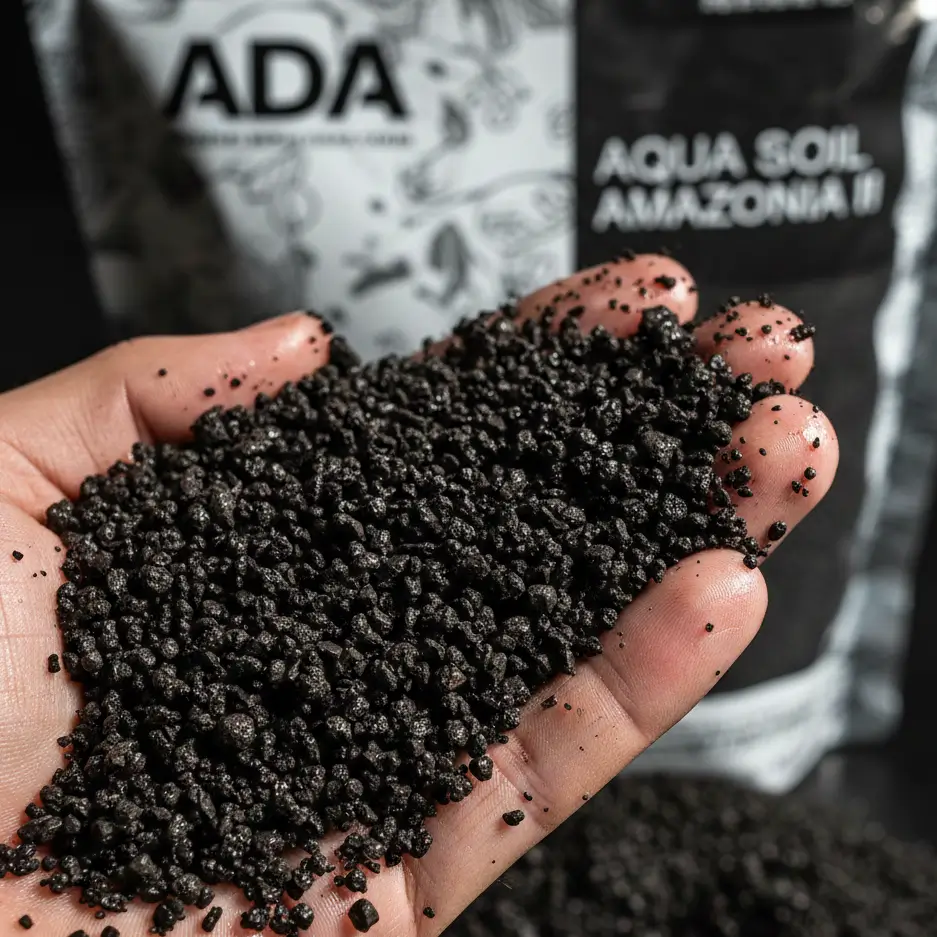
What is ADA Aqua Soil Amazonia?
ADA Aqua Soil Amazonia is an active, baked clay substrate developed by Takashi Amano that lowers pH (to 5.5-6.5) and softens water (lowers kH) to mimic the Amazon River environment. Unlike inert substrates, it possesses a high Cation Exchange Capacity (CEC) and releases significant ammonia initially to jumpstart the nitrogen cycle and fuel root growth.
The Ammonia Spike: My 45-Day Log
Here is the part nobody warns you about sufficiently. When you flood a tank with fresh ADA Amazonia, it leaches ammonia. A lot of it.
I tracked the parameters of a 10-gallon setup using standard Amazonia (not Ver. 2) in early 2023 to see exactly how long the danger zone lasts.
The Leeching Timeline
SETUP:
- Tank: 10 Gallon Rimless
- Substrate: 9L bag ADA Amazonia
- Filtration: Canister filter (established media)
- Temp: 76°F
RESULTS:
- Day 1: Ammonia > 4.0 ppm (Test kit turned black instantly)
- Day 7: Ammonia 4.0 ppm (Despite three 50% water changes)
- Day 14: Ammonia 2.0 ppm, Nitrite spiked to 5.0 ppm
- Day 28: Ammonia 0.25 ppm, Nitrite 0 ppm
- Day 35: 0/0/20 (Safe for livestock)
Even with “seeded” filter media from an old tank, the cycle took 5 weeks because the ammonia load was so high it actually stalled the bacteria initially.
Do not add fish for at least 4 weeks. If you use the Dry Start Method, you can mitigate this, but flooding immediately requires a rigorous water change schedule.
The “Version 2” Confusion
Around 2020, ADA reformulated due to a shortage of the original Japanese black soil. They released “Amazonia Ver. 2.”
Here is the critical difference:
Ver. 2 leaches less ammonia naturally. To compensate, it comes with “Amazonia Supplement” pellets (little white sticks) that you bury underneath.
- Old Amazonia: High ammonia baked in.
- Ver. 2: Moderate ammonia baked in + optional ammonia tabs.
If you are a beginner, Ver. 2 is more forgiving. But the die-hard aquascapers I know still hunt for bags of the “Gold Label” original soil because the growth rates were simply explosive.
Comparisons: ADA vs. The World
I’ve run tanks with almost every substrate on the market. Here is how ADA stacks up against the other big players like Fluval Stratum and inert sand.
ADA AMAZONIA vs. COMPETITORS
| Feature | ADA Amazonia | Fluval Stratum | Inert Sand/Pool Filter |
| Nutrient Content | Extremely High | Moderate | Zero (Needs Root Tabs) |
| Ammonia Leech | High (4+ weeks) | Low/None | None |
| pH Buffering | Aggressive (6.0-6.5) | Mild (6.5-6.8) | None |
| Longevity | 2-3 Years | 1-2 Years | Indefinite |
| Texture | Hard granule, turns to mud | Very light/airy | Heavy/Compact |
| My Experience | Best growth, hardest start | Easy start, floating plants | Cheap, easy, low growth |
“I used Fluval Stratum for a shrimp breeding setup and it was great because it didn’t kill them. But when I tried to grow a thick Dwarf Baby Tears carpet, the Stratum was too light, the plants kept floating away. ADA holds roots down like concrete.”
- Choose ADA if: You are growing a high-tech carpet or demanding stems.
- Choose Stratum if: You want a quicker start for shrimp.
- Choose Sand if: You are on a budget and willing to use root tabs.
The “Melting” Phenomenon (and How to Fix It)
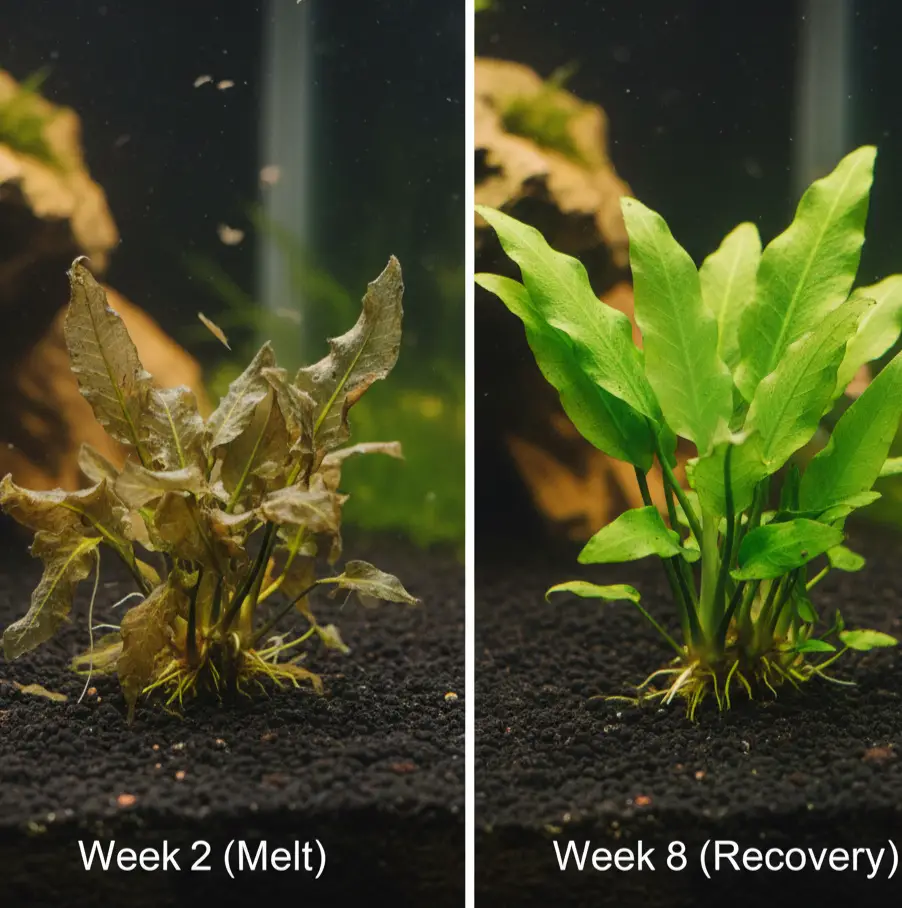
New hobbyists often panic when their plants turn to mush two weeks after planting in ADA.
This happened to me with a batch of Cryptocoryne wendtii. I blamed the light. Then I blamed the seller. I was wrong. The issue was the osmotic shock. ADA soil creates a nutrient-rich, acidic environment at the root zone. If you take a plant grown in neutral water and shove it into fresh ADA, the roots burn.
The Fix:
- Daily Water Changes: For the first week, do a 50% water change every single day. Yes, it’s annoying. It removes the excess ammonia and stabilizes the parameters.
- Week 2: Every other day.
- Week 3: Every 3 days.
- Week 4: Weekly.
This is the standard Amano protocol. When I followed this religiously on my iwagumi stone layout, my melt rate dropped to zero.
MYTH vs REALITY: Substrate Longevity
MYTH: “You have to replace ADA Aquasoil every year.”
REALITY: I have a 60-gallon tank running the same Amazonia soil for 5 years. It still grows plants.
- Texture: Yes, the granules break down into mud eventually (usually year 2-3).
- Nutrients: The inherent nitrogen runs out after 12-18 months.
- The Fix: Once the nutrients deplete, you don’t dump the dirt. You just push root tabs into the mud.
Competitive aquascapers tear down tanks annually for contests, so they always use fresh soil. Hobbyists think this means the soil expires. It doesn’t; it just becomes inert.
Don’t tear down a mature tank. Just supplement the heavy root feeders like Amazon Swords or Crypts.
The Cost Reality (Is it worth it?)
Let’s talk money. A 9L bag of ADA Amazonia runs about $50-60 in 2024. A bag of Pool Filter Sand is $15 for 50lbs.
Is it worth the 400% markup?
If you are setting up a low-tech tank with Anubias, Java Fern, and maybe some Vallisneria, honestly? No. Save your money.
However, if you are attempting a Monte Carlo carpet or growing sensitive red stems like Rotala Rotundifolia, ADA is an insurance policy. The high CEC value means it holds onto nutrients and feeds them directly to the roots. I wasted more money on dead plants using cheap substrate than I would have spent just buying the good soil upfront.
For a comprehensive look at how different substrates affect your overall setup costs and maintenance, check out https://aquaticspoolspa.com/, where we break down budget vs. premium builds in detail.
Specifications: ADA Amazonia Ver. 2
SCIENTIFIC: Baked Andosol (Volcanic Ash Soil)
ORIGIN: Japan (ADA – Aqua Design Amano)
PARAMETERS (Standard 9L Bag):
- Grain Size: Normal (2-4mm) or Powder (1-2mm)
- pH Buffer: 5.5 – 6.5 (Soft/Acidic)
- Ammonia Leech: Moderate (High with Supplement Tabs)
- Nitrate/Phosphate: Rich
- Durability: 18-24 months before muddying
REQUIREMENTS:
- Water Changes: Mandatory daily for Week 1
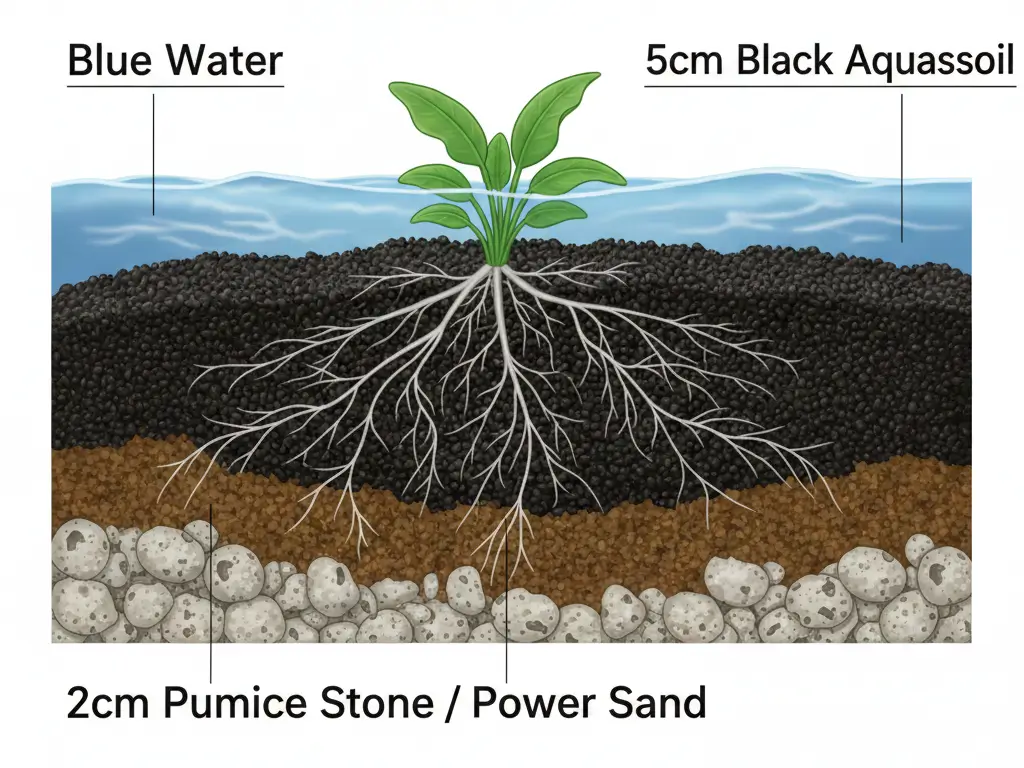
- Substrate Support: Best used with Power Sand base (optional)
- Rinsing: NEVER rinse aquasoil (it will turn into sludge)
CARE REALITY CHECK:
- Difficulty: Intermediate/Advanced
- Beginner-Suitable: No (unless educated on cycling)
- Common Failure: Adding fish day 3 → Ammonia burn
The “Dark Start” Method
If you are patient, this is the cheat code for ADA soil.
I use the “Dark Start” on all my tanks now.
- Set up hardscape and soil.
- Fill with water.
- Turn on the filter and heater.
- Do not plant. Do not turn on lights.
- Wait 4 weeks.
Why? The ammonia spikes and cycles the filter in the dark. Since there is no light, algae cannot grow. After 4 weeks, do a 90% water change, plant your expensive plants, and turn on the lights. The soil is now stable, safe, and cycled. It takes patience, but it works every single time.
Final Verdict
ADA Amazonia is still the king of substrates, but it’s a tyrant king. It demands tribute in the form of water changes and patience.
If you are willing to navigate the first 4 weeks of chemistry chaos, the results in months 3 through 24 are spectacular. The lush, compact growth I get with Amazonia is something I struggle to replicate with any other brand. Just don’t believe the guy at the store who says it’s “ready to go.”
Respect the ammonia, and your tank will thrive.