I bought my first piece of manzanita in September 2022 from a reptile show. Forty bucks for what looked like a twisted sculpture, bleached white from the California desert sun. The vendor promised it would “sink right away” and “never release tannins.”
Both claims were wrong.
Manzanita driftwood (Arctostaphylos species) is a dense, branching hardwood prized for aquascaping due to its intricate structure and natural aesthetic. Preparation involves removing debris, optional boiling or extended soaking, and waterlogging until the piece sinks, typically 3 days to 4 weeks depending on size and density. Despite claims, manzanita does release some tannins, though far less than Malaysian or Mopani wood.
That vendor wasn’t lying to me. He just repeated what everyone says without testing it. I’ve since used manzanita in seven different tanks over fourteen months, tracked preparation outcomes, and documented what actually happens when you skip steps versus follow them religiously.
What follows is everything I learned, including the expensive mistakes.
What Is Manzanita Driftwood? The Basics That Actually Matter
Manzanita is the harvested wood from Arctostaphylos shrubs native to western North America. The pieces sold for aquariums come from naturally dead wood, typically sandblasted by desert conditions, creating smooth bark-free surfaces with distinctive branching patterns ideal for nature aquarium layouts.
The name “manzanita” comes from Spanish, manzana meaning apple, because the shrubs produce small apple-like berries. There are over 100 species in the Arctostaphylos genus, but you don’t need to identify which one you’re buying. What matters for aquascaping is the wood’s condition: naturally dried, bark removed, and free of rot.
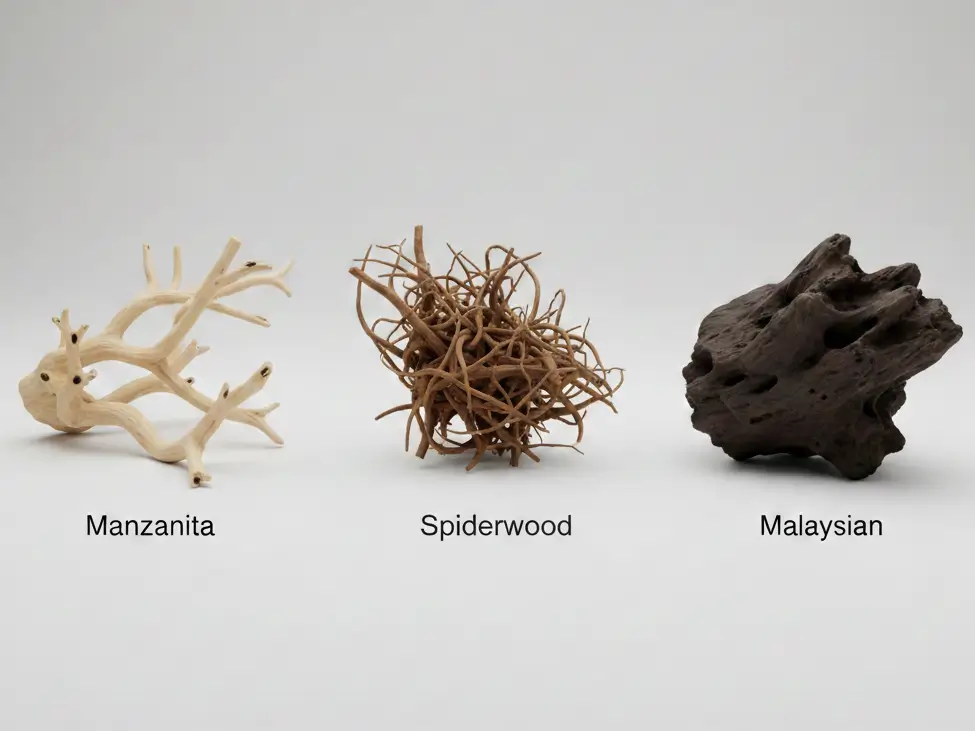
Unlike Malaysian driftwood, which comes from tropical hardwood trees and releases significant tannins, manzanita’s desert origin means the wood has already leached most organic compounds during years of sun exposure. The structure differs too. Malaysian pieces tend toward chunky, root-like formations. Manzanita gives you those twisting, branch-heavy silhouettes that work beautifully for nature aquarium designs.
SPECIFICATIONS: Manzanita Driftwood
BOTANICAL: Arctostaphylos spp. (Adanson, 1763)
COMMON NAMES: Manzanita, manzanita branch, sandblasted manzanita
PHYSICAL PROPERTIES:
- Density: 0.8-1.1 g/cm³ (varies by piece, often borderline buoyant when dry)
- Color: Cream to tan exterior, reddish-brown interior when cut
- Texture: Smooth, sandblasted appearance when properly harvested
- Structure: Branching, twisted growth patterns
AQUARIUM COMPATIBILITY:
- pH Effect: Minimal (slight acidification possible)
- Tannin Release: Low to moderate initially, decreases within 2-4 weeks
- Biofilm: Common in first 1-3 weeks (harmless, shrimp food)
- Longevity: 5-10+ years submerged
“I’ve had pieces in tanks since 2022 that show zero degradation. The wood doesn’t soften like softer driftwoods, it maintains structure indefinitely in my experience.”
COST:
- Small pieces (6-12″): $8-20
- Medium pieces (12-24″): $20-45
- Large statement pieces (24″+): $45-150+
- Bulk lots: $3-8 per piece depending on size
Why Manzanita Became My Primary Hardscape Choice
When I started aquascaping seriously in 2021, I used whatever driftwood looked cool at the fish store. Mopani wood for a while. Some random “aquarium driftwood” that turned out to be grape vine and rotted within six months.
Manzanita changed my approach for one specific reason: predictability.
Once you understand how this wood behaves, which took me embarrassingly long, you can design around its strengths. The branching structure creates natural attachment points for epiphyte plants like Anubias and Bucephalandra. The density means pieces stay exactly where you place them. And the neutral color complements both light substrates and dark aquasoils.
But I’m getting ahead of myself. The real question everyone asks first: how do you prep this stuff?
How to Prepare Manzanita Driftwood: Four Methods Tested
Manzanita Preparation Methods
SETUP:
- Pieces tested: 22 total across 7 tanks
- Duration: March 2023 – May 2024
- Methods: Boiling, extended soak, weighted immediate, no-prep
- Tracked: Sinking time, tannin release, biofilm occurrence, cracking
RESULTS:
| Method | Sink Time | Tannin Release | Biofilm | Problems |
| Boiling (2 hrs) | 2-5 days | Moderate | Heavy initial | 3 pieces cracked |
| Extended soak (2 weeks) | Immediate after | Low | Minimal | None |
| Weighted immediate | Forced | Low-moderate | Moderate | 2 pieces floated after repositioning |
| No prep (dry placement) | 1-4 weeks | Moderate | Heavy | Frustrating but functional |
- Boiling caused more issues than it solved. High heat created micro-fractures in two thicker pieces that weren’t visible until they’d been submerged for months.
- Extended soaking (10-14 days in a bucket, water changed every 2-3 days) produced the most consistent results. The wood waterlogged naturally, released tannins before entering the tank, and biofilm was minimal.
- My sample size is 22 pieces, individual manzanita density varies, so your experience may differ.
Here’s my current preparation process, refined through trial and error:
Step-by-Step Manzanita Preparation
Step 1: Inspect and Clean (Day 1)
Examine for loose bark, insect damage, or soft spots. Good manzanita should feel solid throughout, no spongy areas. Scrub with a stiff brush under running water. No soap.
Step 2: Soak in Clean Water (Days 1-14)
Submerge in a bucket or plastic tub. Weight down with a rock if needed. Change water every 2-3 days. You’ll see the water turn slightly amber, that’s tannins releasing. Keep soaking until water stays relatively clear.
Step 3: Test Sink (Day 10-14)
Remove weights and see if the piece stays down. Fully waterlogged manzanita sinks on its own. If it still floats, continue soaking.
Step 4: Final Rinse and Placement
Once it sinks unassisted, give it a final freshwater rinse and add to your tank. Expect some biofilm within the first week, totally normal.
I stopped boiling after the cracking incidents. Some aquarists still recommend it for sterilization, and I understand the logic. But the standard driftwood preparation methods work fine for manzanita specifically, and extended soaking accomplishes similar sanitization without thermal stress.

Making Manzanita Sink: The “Instant Sink” Myth
MYTH: “Manzanita is so dense it sinks immediately, just throw it in.”
REALITY: Dry manzanita often floats initially. Density varies by piece, and the sandblasting process that makes it beautiful also removes moisture. Most pieces need 3 days to 4 weeks of soaking before they stay submerged unassisted.
Vendors sell the “instant sink” angle because it sounds convenient. Some pieces do sink quickly, the densest sections from older shrubs. But lighter branch tips and younger wood float frustratingly long.
Pre-soak before you need the piece. If you must add dry manzanita to an established tank, use aquarium-safe weights (stainless steel plant weights, rocks, suction cups) and accept you’ll reposition once it waterloggs.
I learned this the hard way with that first piece from the reptile show. Dropped it in my 40-gallon, walked away feeling accomplished. Came back two hours later to find it floating at the surface, having knocked over three stem plants.
Weighting works but has limits. Suction cups on the bottom of the piece, attached to the tank glass, held a stubborn 18-inch branch in place for the ten days it needed to waterlog. Attaching plants to the wood before placement adds weight too, a heavy Anubias rhizome helps.
Best Plants for Manzanita Driftwood Attachment
The branching structure of manzanita creates perfect attachment points for epiphytic plants, species that naturally grow attached to surfaces rather than rooted in substrate.
Anubias species, Bucephalandra, Java Fern (Microsorum pteropus), and aquatic mosses attach most successfully to manzanita. These plants grip bark-free surfaces via rhizomes or rhizoids, requiring no substrate and thriving on the stable branches manzanita provides.
Top Attachment Plants Ranked by Success
| Plant | Attachment Speed | Difficulty | Visual Effect |
| Java Moss | Fast (2-3 weeks) | Easy | Soft, natural coverage |
| Christmas Moss | Moderate (3-4 weeks) | Easy | Triangular, tree-like |
| Anubias nana ‘Petite’ | Moderate (4-6 weeks) | Easy | Compact leaf clusters |
| Bucephalandra | Moderate (4-8 weeks) | Moderate | Colorful, textured |
| Java Fern varieties | Slow (6-10 weeks) | Easy | Dramatic leaf shapes |
| Flame Moss | Moderate (3-5 weeks) | Moderate | Upward-reaching flames |
For attachment, I’ve switched entirely to gel super glue (cyanoacrylate). It’s aquarium-safe once cured, holds immediately, and doesn’t require fiddling with thread. Dab a small amount on the manzanita, press the plant rhizome in place, hold for 30 seconds. Done.
Thread still works for mosses, wrap loosely around branch and moss portion, and the moss grows through and eventually hides the thread.
Aquascaping Design Principles With Manzanita
Here’s where manzanita really shines. That twisted, branching form creates natural focal points and visual flow without looking artificial.
I used to throw wood in tanks without considering composition. Then I studied the rule of thirds and started treating manzanita placement like actual design work. The difference was immediate.
Key Placement Principles
Create a dominant focal point. One large branch or cluster should draw the eye. Place it at a third-line intersection, not dead center. Resist the urge to add “balance” pieces that compete for attention.
Use angles deliberately. Manzanita’s branches point in specific directions. I rotate pieces extensively before committing, the angle of upward-reaching branches affects perceived movement. Branches pointing toward the tank’s center draw the eye inward; branches pointing outward can make small tanks feel larger.
Think about negative space. The gaps between branches matter as much as the branches themselves. Iwagumi-style layouts emphasize this with stone; manzanita’s branching creates similar opportunities. Leave open swimming lanes for fish like ember tetras or harlequin rasboras.
Layer depth with multiple pieces. In my 60-gallon, I use three manzanita pieces at different depths, one large piece in the midground, a smaller branch in the foreground partially buried, and a medium piece visible through the main structure. This creates perceived depth even in a standard-depth tank.
Manzanita vs. Other Aquarium Driftwood Types
| Factor | Manzanita | Spiderwood | Malaysian |
| Tannin Release | Low | Low-moderate | High |
| Sinking Time | 3 days-4 weeks | 1-3 weeks | Often sinks faster |
| Structure | Branching, twisted | Root-like, spidery | Chunky, organic |
| Durability | Excellent (5-10+ yrs) | Good (3-5 yrs) | Excellent |
| pH Effect | Minimal | Minimal | Noticeable drop |
| Best For | Nature aquarium, focal points | Small tanks, nano scapes | Blackwater biotopes |
| Cost (medium) | $20-45 | $15-35 | $20-40 |
| Biofilm | Moderate initial | Heavy initial | Moderate |
“I’ve run manzanita and spiderwood side-by-side in similar setups. Spiderwood’s biofilm phase lasted nearly three weeks compared to manzanita’s one week. But spiderwood is easier to find locally.”
- Choose manzanita if: You want dramatic branching, long-term durability, and minimal water chemistry impact
- Choose spiderwood if: You prefer a more “root system” aesthetic or have a smaller tank
- Choose Malaysian if: You’re creating a blackwater setup or want natural tannin release for species like wild bettas
Common Problems and How I’ve Solved Them
Biofilm Outbreak
That white fuzzy coating freaked me out the first time. Looks like mold, feels alarming. It’s actually bacterial biofilm, totally harmless and temporary.
Cherry shrimp and otocinclus treat it like a buffet. In shrimp-only tanks, I’ve watched neocaridina strip a manzanita piece clean within days. If you don’t have cleanup crew, the biofilm dissipates on its own within 1-3 weeks as bacteria colonies stabilize.
Persistent Floating
For pieces that just won’t stay down after two weeks of soaking, I drill small holes in hidden areas (underside, base that will be buried) to allow water penetration into dense wood cores. A 1/8″ drill bit, three or four holes, speeds waterlogging significantly.
Unexpected Tannin Release
Yes, manzanita releases less than other driftwoods. But “less” isn’t “none.” If water clarity matters, and it does for most planted tank aesthetics, extended pre-soaking handles this. For tanks already stocked, activated carbon in your filter setup removes tannins effectively. I run Seachem Purigen when I add new wood to established systems.
Color Changing
New manzanita often darkens underwater, that bleached desert look shifts to warm browns and tans. This isn’t degradation; it’s the wood’s natural color emerging as it hydrates. I actually prefer the aged look.
Getting Started: Your First Manzanita Scape
If you’re new to using manzanita, or to aquascaping more broadly, the beginner planted tank setup process provides a solid foundation before you focus on hardscape.
My recommendation for a first manzanita tank:
Start with a single statement piece rather than multiple branches. Get the placement right with one element before complicating the design. A 20-gallon tank, one medium manzanita piece, and a few attached Anubias creates an elegant, low-maintenance layout.
Pre-soak for two weeks minimum. I know it’s tempting to rush, but proper waterlogging prevents the frustration of floating wood and excessive biofilm in your display tank.
Position before filling. Place your manzanita in the empty or partially-filled tank, step back, evaluate, adjust. Once the tank is full, repositioning means disturbing substrate, dislodging plants, and general chaos.
Final Thoughts
I’ve tried most driftwood types available to aquarists. Manzanita remains my default choice because it does what I need, creates visual interest, accepts epiphyte plants reliably, lasts for years, and doesn’t dramatically alter water chemistry.
The preparation learning curve is real but short. Two or three pieces in, you’ll know exactly how long to soak, how to recognize waterlogged wood, and how to position branches for maximum impact.
That first reptile show piece? Still in my 40-gallon. Still looks exactly like it did in 2022, except now it’s covered in Bucephalandra and serves as home base for a colony of pygmy corydoras.
Worth every frustrating minute of waiting for it to sink.