I used to treat all Java Ferns (Microsorum pteropus) exactly the same. I thought they were basically plastic plants that grew, indestructible, low-light, set-and-forget.
Big mistake.
In early 2022, I bought a massive “mother pot” of Java Fern Windelov and a delicate tissue culture of Needle Leaf. I threw them both into the same low-tech 20-gallon setup, buried the roots slightly (the first sin of fern keeping), and ignored them. Three weeks later? The Needle Leaf was covered in Black Beard Algae, and the expensive Windelov clump had turned into brown mush that smelled like a swamp.
If you’ve ever watched a “hardy” plant dissolve before your eyes, you know the frustration.
Here is the reality: While Windelov and Needle Leaf share the same DNA, their aquascaping requirements are different. After correcting my flow rates and dosing specifically for potassium, I finally got that lush, jungle look. Here is the data, the science, and the specific care requirements for these two distinct varieties.
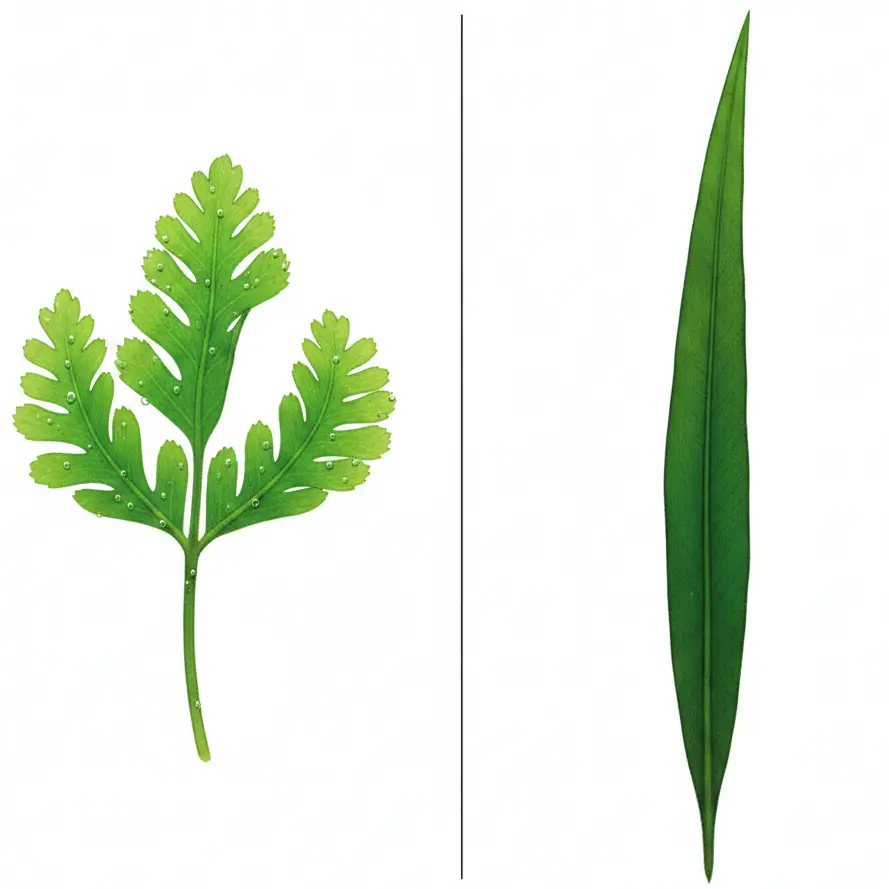
Windelov vs. Needle Leaf: The Real Differences
Before we get into the parameters, you need to know what you are actually buying. These aren’t just different shapes; they behave differently in the water column.
Windelov (Microsorum pteropus ‘Windelov’) is a cultivated variety with split, crested leaf tips that grows 6-8 inches tall, ideal for midground. Needle Leaf (Microsorum pteropus ‘Needle’) features long, thin leaves reaching 12+ inches, used for background texture. Windelov is more prone to detritus trapping, while Needle Leaf requires higher flow to prevent algae on its delicate fronds.
| Feature | Windelov | Needle Leaf | My Experience |
| Scientific Name | M. pteropus ‘Windelov’ | M. pteropus ‘Needle’ | Windelov is a patent cultivar; Needle is a wild variant. |
| Leaf Structure | Broad, tri-split tips | Thin (<5mm), ribbon-like | Windelov tips trap debris; Needle flows with current. |
| Max Height | 6-8 inches (Compact) | 10-14 inches (Tall) | Needle Leaf took 9 months to hit max height in my tank. |
| Growth Rate | Slow | Slow-Medium | Needle Leaf outpaced Windelov by about 20% in my tests. |
| Placement | Midground / Hardscape | Background / Corners | Windelov looks best attached to spiderwood. |
The “Indestructible” Myth: How I Melted a $40 Mat
There is a pervasive myth in the hobby that you can’t kill Java Fern. I am living proof that you can.
The defining feature of all Microsorum species is the rhizome. This is the thick, horizontal green “stick” from which the leaves grow up and the roots grow down.
When I set up my first beginner planted tank, I treated the fern like an Amazon Sword. I buried that rhizome deep in the substrate to keep it from floating away.
The result? Rhizome rot.
The rhizome needs to “breathe.” It requires direct contact with the water column to exchange oxygen and nutrients. When you bury it, anaerobic bacteria attack the structure, turning it into black mush.
My Rescue Strategy
When I realized my mistake with that Windelov mat, I pulled it out. The center was dead, but the outer edges were firm.
- I used a sharp scalpel to cut away all the black, mushy parts.
- I was left with three tiny fragments, barely an inch long.
- I superglued them to a piece of Cholla cactus wood.
Six months later, those fragments had grown into a baseball-sized clump. The lesson? Microsorum is resilient, but only if the rhizome is exposed.
Ideal Parameters & Nutrient Requirements
A lot of guides gloss over this, but Java Ferns are potassium hogs. If your leaves are developing tiny pinholes that eventually turn into large jagged holes, that is not a snail problem. That is a potassium deficiency.
Here are the parameters I maintained to get my Needle Leaf from “surviving” to “thriving.”
SCIENTIFIC: Microsorum pteropus (Blume) Ching
ORIGIN: Southeast Asia (Windelov cultivar by Tropica, Denmark)
PARAMETERS (Research-Based)
- Temperature: 68-82°F (20-28°C)
- pH: 6.0-7.5 (Acidic to Neutral preferred)
- Hardness: 3-8 dKH (Soft to Moderate)
- Lighting: Low to Moderate (PAR 30-50)
- CO2: Not required (but increases growth speed significantly)
NUTRIENT PRIORITY:
- Potassium (K): High demand. Deficiency = Pinholes.
- Nitrates (NO3): Moderate demand. 10-20 ppm is ideal.
- Iron (Fe): Low demand.
“I ran a tank with 0 nitrates for a month (heavy filtration). The Java Ferns stopped growing entirely. They don’t need much, but they can’t run on zero fuel.”
Planting Techniques That Actually Last
Since we can’t bury them, we have to mount them. I’ve tested three methods across various hardscapes like Manzanita driftwood and Dragon Stone.
1. The Superglue Method (Gel Type)
This is my go-to for small rhizomes.
- Pros: Fast, secure, invisible after growth.
- Cons: Messy if you use too much; leaves white residue.
- My Tip: Use Cyanoacrylate Gel (Gorilla Glue Gel works). Apply a tiny dot to the wood, not the plant. Press the rhizome (not the roots) onto the dot for 10 seconds. Dip in water to set immediately.
2. The Thread/Fishing Line Method
Better for large mats or spiderwood.
- Pros: No chemical risk, adjustable.
- Cons: Trying to tie a knot with wet hands inside a tank is a nightmare.
- My Experience: I used cotton thread for a year. It eventually rotted away (which is good), but the fern hadn’t fully attached yet, and it floated to the surface. I switched to dark green fishing line for permanent mounting.
3. The Wedge Method
This is the “lazy” method, but honestly, it’s the most natural.
- Find a crevice in your rock work or a fork in your driftwood.
- Jam the rhizome snugly into the gap.
- Done.
I used the wedge method when setting up a low-tech Monte Carlo carpet tank where I wanted the ferns to look like they grew out of the rocks naturally. It worked perfectly, and I didn’t get glue on my fingers.
The “Low Light” Nuance: Windelov vs. Needle Leaf
This is where the unique angle comes in. Both plants are labeled “low light.”
However, Windelov is denser. The crested tips create a thick canopy. If you put this in a dark corner with zero flow, detritus (fish waste) collects in those frilly tips. This leads to algae.
Needle Leaf, on the other hand, is thinner. It lets light pass through. But because the leaves are so thin, they are prone to Green Spot Algae if the light is too direct and the phosphates are low.
My recommendation:
- Windelov: Place it in the path of your filter outflow. The flow keeps the tips clean.
- Needle Leaf: Place it slightly off-center from the light source. It creates a beautiful swaying effect in the current.
To really optimize the setup, I recommend looking at aquaticspoolspa.com for their guides on water circulation; getting the flow right was the turning point for my Needle Leaf tank.
Common Problems & Troubleshooting
Even with the best care, things get weird. Here are the issues I’ve personally battled.
MYTH: “Black spots on the leaves mean the plant is dying or has a fungus.”
REALITY: Those are reproductive spores (Sori). The plant is healthy and reproducing.
Research: Microsorum reproduces via sporogenesis on the underside of leaves (Tropica, 2024).
My Observation: Every time I saw neat rows of black/brown bumps, 3 weeks later, tiny baby ferns sprouted from those spots.
Rot is also black. But rot is mushy and irregular. Spores are firm, raised, and patterned.
WHAT TO DO: Nothing! Let the baby ferns grow until they have 3-4 leaves, then pluck them off and replant.
The “Java Fern Melt”
If you buy a potted fern that was grown emersed (out of water) at the farm, it will likely melt when submerged. The leaves turn translucent and dissolve.
- Don’t panic.
- Trim the melting leaves.
- The rhizome is likely still alive. It will push out new, submerged-adapted leaves in 2-4 weeks.
Algae Magnet
Because these are slow growers, algae loves them. I battled Black Beard Algae (BBA) on my Needle Leaf for months.
- The Fix: I used Seachem Flourish Excel (glutaraldehyde) to spot-treat. I turned off the filter, used a syringe to squirt Excel directly on the algae, waited 10 minutes, and turned the filter back on. The algae turned red and died within 24 hours.
Which Variety is Right for You?
After three years of tweaking flow rates, gluing fingers together, and battling algae, I’ve come to love both varieties, but for different reasons.
Choose Windelov if you have a nano tank (10-20 gallons) or want a specific focal point on a piece of wood. Its compact, bushy nature makes it feel like a terrestrial bush underwater.
Choose Needle Leaf if you have a larger tank (40+ gallons) or want that classic “Nature Aquarium” swept-back look. It adds movement and flow that Windelov just can’t replicate.
Just remember: Don’t bury the rhizome. Feed them potassium. And please, give them a little water flow. They might be “hardy,” but they still need to breathe.