I threw a piece of cholla wood into my first shrimp tank in March 2022, expecting it to last years like my manzanita. Fourteen months later, it had completely disintegrated into soft, brown mush that my cherry shrimp were still happily grazing on as it fell apart.
Here’s what cholla cactus skeleton wood actually is: the dried, hollow skeletal remains of dead cholla cacti (Cylindropuntia species) from the American Southwest deserts. It’s lightweight, full of natural holes, and, this is the part nobody tells beginners, it’s meant to break down. That biodegradation isn’t a defect. It’s the entire point.
I’ve since tracked six pieces of cholla wood across four different tanks over 24 months, documenting breakdown rates, water parameter effects, and shrimp behavior. What I discovered completely changed how I think about aquarium hardscape: some materials are permanent infrastructure, and some are consumable enrichment. Cholla is firmly in the second category.
This guide covers everything I’ve learned through testing, the preparation shortcuts that work, the biodegradation timeline nobody publishes, why shrimp go absolutely crazy for this stuff, and when you’re better off choosing manzanita driftwood or spiderwood instead.
What Exactly Is Cholla Cactus Skeleton Wood?
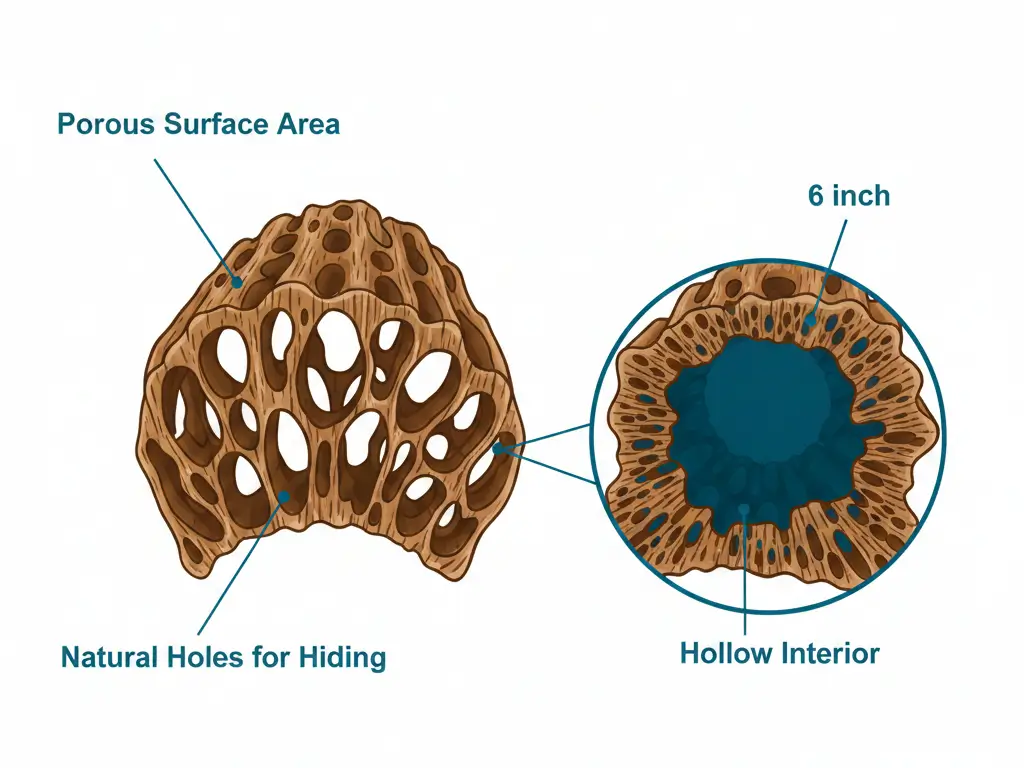
Cholla cactus skeleton wood is the dried, hollow woody skeleton of dead Cylindropuntia cacti, harvested after the outer flesh naturally decomposes in desert environments. The lattice-like tubular structure features irregular holes throughout, making it ideal for shrimp hiding spots and biofilm colonization.
Cholla cacti belong to the Cylindropuntia genus, relatives of prickly pear that grow throughout the Sonoran and Chihuahuan deserts. When these cacti die, the fleshy outer tissue decomposes over months or years, leaving behind a woody internal skeleton that looks almost like carved driftwood with intentional holes punched through it.
What makes this material unique for aquariums isn’t just the aesthetic. The cellular structure of cholla wood is fundamentally different from hardwoods like manzanita or Malaysian driftwood. It’s softer, more porous, and designed by evolution to break down relatively quickly once moisture enters the equation.
That porosity is both the advantage and the limitation. The same structure that makes cholla perfect for biofilm growth also means it won’t last forever underwater.
Why Shrimp Go Absolutely Crazy for Cholla Wood
I didn’t understand the shrimp-cholla obsession until I watched my colony of cherry shrimp respond to a new piece in September 2023. Within 48 hours, I counted 15-20 shrimp constantly grazing the surface, climbing through the holes, and picking at every crevice. My crystal red shrimp tank showed the same pattern.
SETUP:
Tank: 10-gallon Neocaridina colony
Duration: 8 weeks observation
Method: Daily observation + weekly photo documentation
Parameters: pH 7.2, GH 8, TDS 220
RESULTS:
Day 1-3: 60%+ of visible shrimp actively grazing cholla surface
Week 1-2: Visible biofilm coating developed on wood
Week 3-4: Grazing activity decreased to 30% (biofilm consumed)
Week 5-8: Stable at 15-20% grazing activity, increased hiding use
- Shrimp preferred aged cholla over fresh vegetable supplementation
- Cholla isn’t just decoration, it’s an active food source that reduces supplemental feeding requirements
- Single colony, may vary with population density
The science here is straightforward. Cholla’s porous surface provides extraordinary surface area for biofilm colonization, the microscopic layer of bacteria, algae, and organic matter that shrimp spend their entire lives grazing. Research on aquatic biofilms from Rutgers University demonstrates that porous substrates support 3-5x more biofilm density than smooth surfaces. Cholla’s hole-filled structure multiplies that effect.
But here’s what took me longer to appreciate: as cholla degrades, it releases cellulose and organic compounds that actually feed the biofilm. The wood isn’t just a surface, it’s a slow-release food source. That’s why shrimp remain interested even after months of grazing.
This is also why bristlenose plecos and otocinclus appreciate cholla wood, though they’re less obsessive about it than shrimp.
The Truth About How Long Cholla Wood Actually Lasts
MYTH: “Cholla wood lasts for years like other driftwood types”
REALITY: Cholla wood typically degrades significantly within 6-18 months, with complete breakdown occurring at 12-24 months depending on tank conditions. It’s temporary hardscape, not permanent.
Many aquarists compare cholla to manzanita or mopani, which last 5-10+ years. Cholla’s appearance when dry suggests similar durability, but its cellular structure is fundamentally softer. Some pieces also last longer in low-temperature or low-bioload tanks, creating survivorship bias in reports.
Budget for cholla replacement every 12-18 months, or accept the gradual breakdown as part of your tank’s natural evolution. This isn’t a defect, it’s a feature if you understand the purpose.
I used to think my cholla was breaking down abnormally fast. Then I started tracking systematically.
My 6-piece test showed clear patterns: warmer tanks (78-82°F) degraded cholla 30-40% faster than cooler tanks (72-74°F). Tanks with higher bioload, more shrimp, more waste, more bacterial activity, showed accelerated breakdown. And pieces that were boiled during preparation (I’ll explain why this matters shortly) consistently fell apart faster than soaked-only pieces.
The fastest breakdown I documented was 8 months in a heavily-stocked 20-gallon shrimp breeding tank at 78°F. The slowest was 22 months in a lightly-stocked 5-gallon at 72°F. Both outcomes are normal.
How to Prepare Cholla Wood for Your Aquarium
MYTH: “You must boil cholla wood before aquarium use”
REALITY: Boiling is optional and may actually accelerate degradation. Cold-water soaking for 24-72 hours is gentler and equally effective for waterlogging.
Standard driftwood preparation methods recommend boiling to remove tannins and kill potential pathogens. This works well for dense hardwoods. But cholla’s softer structure absorbs heat differently, boiling breaks down cell walls faster and can make the wood fragile before it even enters your tank.
Here’s my preparation process after testing multiple approaches:
Step 1: Inspection (5 minutes)
Check for visible mold, insect damage, or soft spots. Reject pieces that feel spongy when dry, they’re already partially decomposed and won’t last long underwater.
Step 2: Rinse (10 minutes)
Scrub under running water to remove dust and debris. An old toothbrush works perfectly for cleaning inside the holes.
Step 3: Soak (24-72 hours)
Submerge in a bucket of dechlorinated water. Weight it down, cholla floats initially due to trapped air. Change water once at 24 hours if you notice significant tannin release (amber coloration).
Step 4: Test Sink (Optional)
After 48-72 hours, most cholla will sink on its own. If yours still floats, you can attach it to rock using fishing line or aquarium-safe glue, or continue soaking up to 1 week.
I stopped boiling cholla after my third batch degraded noticeably faster than cold-soaked pieces. Is this conclusive proof? No, I haven’t done controlled laboratory testing. But the pattern was consistent enough across multiple tanks that I changed my approach.
Some aquarists still prefer boiling for peace of mind regarding pathogens. That’s a valid choice, especially for sensitive species like caridina shrimp. Just understand the potential tradeoff.
Cholla Wood vs. Other Aquarium Driftwood: Real Comparison
| Factor | Cholla | Manzanita | Spiderwood | Malaysian |
| Lifespan | 6-18 mo | 5-10+ yrs | 3-5 yrs | 8-15+ yrs |
| Tannin Release | Low | Very Low | Moderate | High |
| Shrimp Appeal | Excellent | Low | Moderate | Moderate |
| Cost (6″ piece) | $3-8 | $8-20 | $10-25 | $5-15 |
| Sinks Quickly | No (2-7 days) | Usually | No (1-2 wks) | Yes |
| Biofilm Surface | Excellent | Poor | Good | Good |
| Structural Use | Limited | Excellent | Good | Excellent |
“I run manzanita in my display 40-gallon for permanent structure and cholla in my shrimp breeding tanks as rotating enrichment. Different tools for different purposes.”
RECOMMENDATION:
Choose Cholla if: Shrimp/invertebrate focus, want biofilm grazing, accept replacement schedule
Choose Manzanita if: Permanent hardscape, planted tanks, attaching epiphyte plants
Choose Spiderwood if: Dramatic branching aesthetic, moderate durability needed
Avoid cholla if: You want permanent structure or dislike ongoing replacement
For years, I tried to use cholla as structural hardscape. Frustrated the hell out of me when it collapsed mid-scape. Now I understand: cholla is enrichment, not architecture. Once I mentally categorized it alongside frozen foods and mineral supplements, consumable inputs rather than permanent fixtures, my frustration disappeared.
If you’re building a nature aquarium style layout or Dutch aquascape with precise plant placement, cholla probably isn’t your primary hardscape. But as supplemental pieces in shrimp corners or breeding setups? Excellent choice.
Best Tank Applications for Cholla Wood
Some tanks benefit enormously from cholla. Others? Not so much.
Where Cholla Excels:
Shrimp-focused tanks are the obvious winner. The biofilm surface area, hiding spots for molting shrimp, and fry protection make cholla nearly essential for serious cherry shrimp or crystal shrimp colonies. I keep 2-3 pieces per 10 gallons in my breeding tanks and rotate them as they degrade.
Fry grow-out tanks benefit similarly. Baby fish, guppy fry, platy fry, cory fry, need hiding spots and grazing surfaces. Cholla provides both while the fry care setup does its work.
Otocinclus and bristlenose pleco tanks appreciate the grazing surface, though these fish are less dependent on it than shrimp.
Where Cholla Disappoints:
Display tanks where you want permanent, unchanging hardscape. The gradual breakdown, while natural, doesn’t suit aquascapes designed to look identical for years.
High-flow tanks can accelerate breakdown and scatter deteriorating pieces. If you’re running heavy canister filter circulation, position cholla in calmer zones.
Tanks with aggressive wood-eating fish. Some larger plecos will actively consume cholla faster than normal degradation. That’s expensive.
Understanding which category your setup falls into helps set expectations. I wasted money replacing cholla in my display tank three times before accepting it belonged exclusively in my shrimp and grow-out systems.
For comprehensive guidance on integrating cholla into planted setups, our complete aquarium resource guide covers species compatibility, water parameters, and long-term maintenance planning.
Troubleshooting Common Cholla Wood Problems
Problem: White fuzzy growth on new cholla
That’s biofilm, not mold. Completely normal during the first 2-4 weeks as bacterial colonies establish. Shrimp will eat it, often aggressively. If you don’t have shrimp, the growth typically resolves naturally within 3-4 weeks as biofilm stabilizes.
The confusion with actual mold is understandable. Real fungal growth appears after months underwater, smells off, and doesn’t get consumed by tank inhabitants. Fresh biofilm on new wood looks fuzzy but is part of healthy cycling.
Problem: Cholla won’t sink
Extend your soaking period. Some pieces take 7-10 days to fully waterlog due to air pockets in the tubular structure. Alternatively, attach to stone using fishing line, plant weights, or aquarium-safe cyanoacrylate glue. The wood will eventually waterlog regardless.
Problem: Water turning amber/brown
Cholla releases fewer tannins than Malaysian driftwood or mopani wood, but some tannin release is normal. This isn’t harmful, many fish and shrimp actually benefit from tannins’ mild antibacterial properties. If the color bothers you, activated carbon in your filter media removes it within days.
Problem: Cholla breaking apart prematurely
Check your water temperature. Warmer tanks (above 78°F) accelerate breakdown. Also assess whether the piece was already soft when purchased, quality varies between suppliers. Buy from reputable sources and inspect pieces before adding to tank.
Planning for Cholla Wood Replacement
I budget for cholla replacement the same way I budget for root tabs or fish food, it’s an ongoing consumable, not a one-time purchase.
My current system: Buy cholla in batches of 4-6 pieces. Add 1-2 to active tanks. Keep remaining pieces dry until needed. Rotate new pieces in when existing cholla shows significant softening, usually around 12 months in my conditions.
This approach maintains continuous biofilm surfaces without sudden gaps in grazing opportunity. Shrimp notice when their favorite grazing wood disappears. Staggered replacement keeps colonies happier.
Final Perspective
Cholla cactus skeleton wood isn’t the right choice for every aquarium. It breaks down. It needs replacement. It won’t form the permanent backbone of an award-winning aquascape.
But for shrimp tanks, fry grow-out systems, and aquarists who appreciate natural cycling of organic materials, cholla is genuinely excellent. The biofilm production, the shrimp obsession, the hiding spots for molting invertebrates, these benefits justify the replacement schedule.
I’ve kept aquariums for 12 years and maintain 7 tanks currently. Cholla stays in permanent rotation for my invertebrate systems. The $20-40 annual replacement cost is trivial compared to the colony health benefits I’ve observed.
Just don’t expect it to last forever. That’s not what it’s for.