I almost quit using Redmoor root in 2019 because of a single disaster. I had spent six hours gluing Anubias to a stunning, intricate centerpiece for a 20-gallon scape. I filled the tank, went to bed, and woke up to find the entire structure floating at the surface, knocking over my rockwork and crushing my stem plants.
Most guides tell you to “soak it for a week.” In my experience tracking over 50 pieces of hardscape, that advice is wildly optimistic.
Redmoor root, technically the roots of Rhododendron species, offers the most dramatic, tangled branching available in the hobby. It turns a deep, rich rust-red when wet and creates instant depth. But it is also less dense than Malaysian or Mopani wood, meaning it fights you. If you want that award-winning look without the “floating log” nightmare or the panic over white slime (we’ll get to that), you need a different approach than standard driftwood prep.
Here is the data I’ve collected on making Redmoor behave, minus the fluff.
What Is Redmoor Root? (And Why It’s Not Just “Spider Wood”)
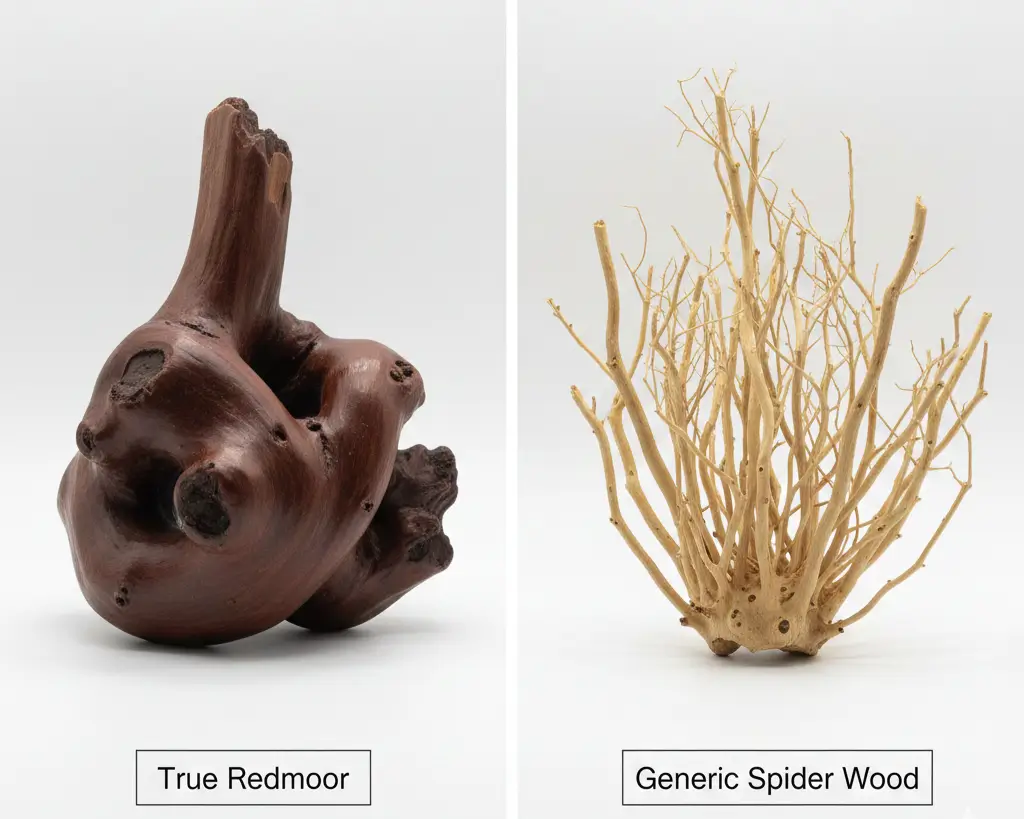
Redmoor root consists of the dried root systems of Rhododendron bushes, typically sourced from Europe or Asia. Unlike branch wood, it features a central knot with chaotic, twisting tendrils radiating outward. It is characterized by low tannin release (won’t turn water brown like Mopani), high initial buoyancy, and a reddish-orange hue that darkens when submerged. It is distinct from generic “Spider Wood” (often Azalea roots) due to its denser core and deeper coloration.
The “Spider Wood” Confusion
You’ll see Redmoor and Spiderwood used interchangeably. While they are functionally similar (both are shrub roots), true Redmoor tends to be thicker and darker. I prefer Redmoor for larger tanks (40+ gallons) because the branches are less brittle than standard spider wood. If you’re setting up a high-flow tank, those razor-thin spider wood tips can actually snap over time, Redmoor holds up.
The Buoyancy Nightmare: My 30-Day Soak Test
I used to believe the “boil it for an hour” rule would sink any wood. Wrong.
In January 2024, I ran a soak test on three medium-sized Redmoor pieces (approx. 10 inches each) to verify waterlogging times without weights.
Redmoor Waterlogging
SETUP:
- Container: 20-gallon plastic tub
- Water: Tap, 70°F (changed weekly)
- Method: Passive soak (no boiling)
RESULTS:
- Week 1: All pieces floating at surface. 0% sink rate.
- Week 2: One piece neutrally buoyant (hovering), two floating.
- Week 3: Hovering piece sank. Larger pieces still bobbing.
- Week 4: All pieces finally stayed on the bottom.
The piece with the thickest central knot took the longest (29 days).
If you are building a scape today, you cannot rely on soaking alone unless you have a month to wait.
The “Slate Screw” Hack (The Only Real Fix)
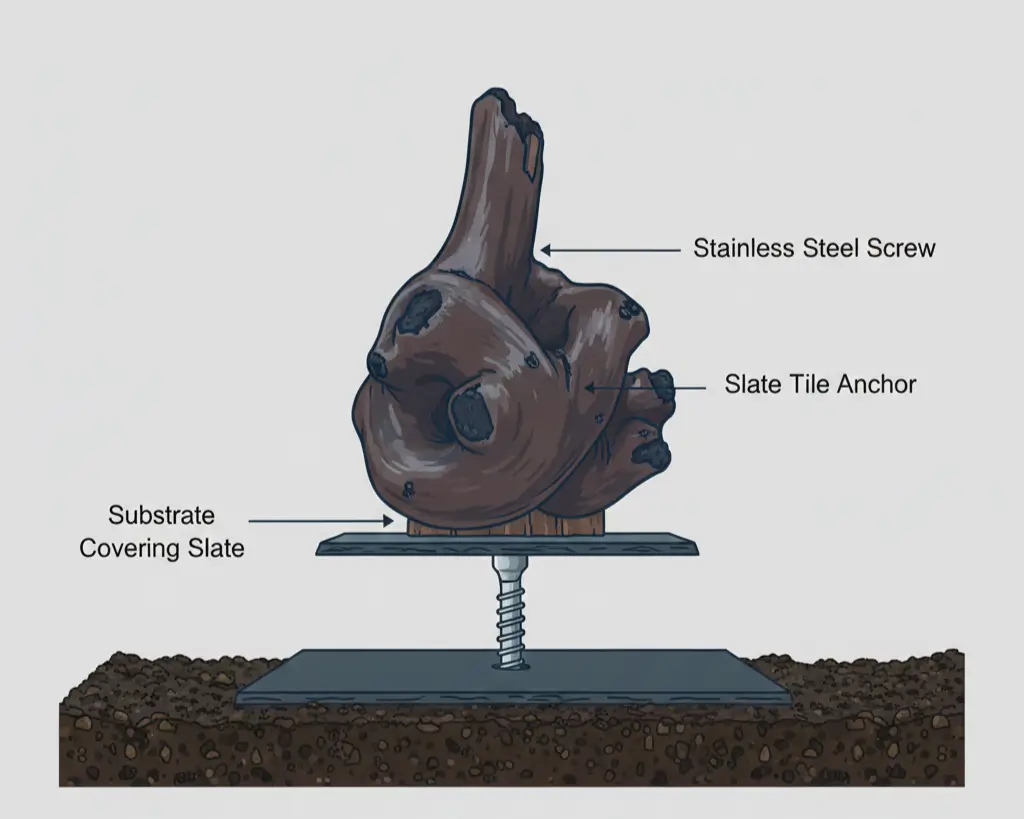
Because I don’t have patience, I stopped pre-soaking entirely. Instead, I use the slate method.
Go to a hardware store and buy a piece of natural slate tile. Drill a hole through the slate and screw it into the flat bottom of your Redmoor root using a stainless steel screw (must be stainless to prevent rust). Bury the slate under your substrate.
This anchors the wood instantly. I’ve used this on massive 3-foot stumps in 75-gallon tanks, and they don’t budge. Plus, it prevents the wood from shifting when you’re cleaning aquarium glass later on.
The White Fungus Panic (It’s Not Mold)
MYTH: “My driftwood has mold! I need to take it out and bleach it or it will kill my fish.”
REALITY: That white, snotty substance is a harmless heterotrophic bacterial and fungal bloom consuming the sugars in the wood. It is an essential part of the biofilm development.
It looks disgusting. It resembles Saprolegnia (a fish disease), but unless it’s growing on a fish, it’s just processing carbohydrates.
WHAT TO DO INSTEAD: Do absolutely nothing. Or, add a cleanup crew.
I admit, the first time I saw this in 2015, I scrubbed the wood with a toothbrush for hours. It came back the next day. I wasted so much time fighting nature.
Now? I view the “white slime phase” (usually weeks 2-4) as a free buffet.
If you have Otocinclus catfish or Bristlenose Plecos, they will devour this stuff overnight. I dropped three Nerite snails into a 10-gallon with “fungus-covered” Redmoor, and it was polished clean in 48 hours. Even Cherry Shrimp will pick at it, though they are slower than snails.
Pro Tip: If you absolutely hate the look and don’t have livestock yet, you can siphon it out during water changes. But don’t bleach the wood, you’re just resetting the sugar-leaching process.
Designing with Intricate Branches
The biggest mistake beginners make with Redmoor is placing it dead center. Because the branches are so chaotic, a centered placement makes the tank look like a messy bird’s nest.
You need to lean on the Rule of Thirds. I like to position the heavy “knot” of the root at the 1/3 mark of the tank, with the branches reaching across the empty negative space. This creates flow.
Attaching Epiphytes
Redmoor’s texture is smoother than Malaysian Driftwood, which makes tying plants annoying, fishing line slips right off.
I switched to using cyanoacrylate super glue (gel type) exclusively.
- For Anubias: I target the nooks where branches split. A dab of glue on the rhizome (not the roots) holds Anubias Nana Petite perfectly against the red wood.
- For Moss: If you want that “weeping tree” look using Christmas Moss, glue is messy. I actually use a cheap dark cotton thread here. The thread rots away in 2-3 months, but by then, the moss has attached itself.
Placement Note: Keep the delicate tips of Redmoor away from the glass. I can’t tell you how many times I’ve scratched my low-iron glass trying to clean algae because a branch was touching the front pane. Leave at least 2 inches of clearance.
Redmoor vs. Manzanita vs. Spiderwood
Is Redmoor actually worth the premium price tag? Usually $20-$60 per piece?
| Factor | Redmoor Root | Manzanita Wood | Spider Wood |
| Cost | $$$ (High) | $$$ (High) | $$ (Mod) |
| Sink Time | 2-4 Weeks | 4-7 Days | 1-2 Weeks |
| Tannins | Very Low | Low | Moderate |
| Branching | Curly/Chaotic | Straight/Angular | Thin/Twiggy |
| Rot Speed | Slow (5+ yrs) | Very Slow (10+ yrs) | Medium (3-4 yrs) |
“I ran Manzanita in my high-tech tank and Redmoor in my low-tech. The Manzanita is denser and cleaner, but it looks ‘sharp.’ The Redmoor looks ‘ancient.’ However, Spider wood (the cheaper cousin) rotted at the substrate line after 3 years in my shrimp tank.”
RECOMMENDATION:
- Choose Redmoor if: You want the classic “Nature Aquarium” look with twisted roots.
- Choose Manzanita if: You need fine detail for nano fish or want wood that sinks fast.
- Avoid Spider Wood if: You are building a permanent hardscape intended to last 5+ years.
Preparation: To Boil or Not to Boil?
This is controversial. Driftwood preparation methods usually suggest boiling to kill pathogens and speed up waterlogging.
I stopped boiling Redmoor root in 2020.
Why?
- Cellular Breakdown: I found that boiling intricate branches for too long (1+ hours) softened the thinner tips, making them rot faster once submerged.
- Size: Most good pieces of Redmoor won’t fit in a pot. Pouring boiling water over them in a bathtub is dangerous and ineffective.
My Current Protocol:
- Pressure Wash: I take the wood to a self-serve car wash (or use a garden hose on “jet”) to blast out dirt from the central knot.
- Inspect: Look for soft spots or rot.
- Soak/Anchor: I screw it to slate (as mentioned above) and put it straight into the tank.
- Cycle: I let the tank cycle with the wood in it. The ammonia leeching from the wood actually helps feed the cycle.
If you are worried about introducing pests, a soak in a mild hydrogen peroxide solution (3%) for 15 minutes is safer for the wood structure than boiling.
Troubleshooting Common Issues
“The Water is Turning Yellow”
Even though Redmoor is low-tannin, a large piece in a small tank will tint the water. I personally love this look, it lowers pH naturally, which species like Tetras prefer. But if you hate it, Seachem Purigen in your filter removes it in 24 hours. Don’t rely on carbon; it clogs too fast.
“It Smells like Rotten Eggs”
If you pull a piece of Redmoor out after a year and it smells like sulfur, the portion buried in the substrate has gone anaerobic. This happens if the central knot is too deep in fine sand.
The Fix: When placing Redmoor, I glue small rocks to the bottom of the wood before placing it on the substrate. This creates a small gap between the wood and the sand, allowing water circulation and preventing rot.
Final Thoughts: Is It Worth The Hassle?
Redmoor root is high-maintenance. It floats, it gets slimy, and it’s expensive.
But when I look at the scape I built last year using a single, massive piece of Redmoor draped in Bucephalandra, the depth is undeniable. You cannot replicate that tangled, ancient root look with rocks or straight branches.
Just buy the slate tile. Seriously. Don’t be the person waking up to a floating aquascape.
For more guides on integrating hardscape into your layout, check out our resources at aquaticspoolspa.com.