I used to think choosing hardscape was just about what looked cool on Instagram. Big mistake.
In 2018, I set up a pristine Iwagumi layout using 20 pounds of grey Seiryu stone. I was aiming for a soft water Caridina shrimp setup. Within three weeks, my pH had climbed from 6.4 to 7.6, and my expensive Crystal Reds were stressed and hiding. I didn’t understand that I wasn’t just putting rocks in a tank, I was putting a chemical buffer system in a glass box.
On the flip side, Dragon Stone (Ohko) is inert but comes with a “labor tax” nobody warns you about.
If you are torn between the warm, clay-like textures of Dragon Stone and the jagged, grey peaks of Seiryu, you need more than photos. You need to know how they behave underwater. I’ve broken, cleaned, and water-tested both over the last decade. Here is what actually happens when they get wet.
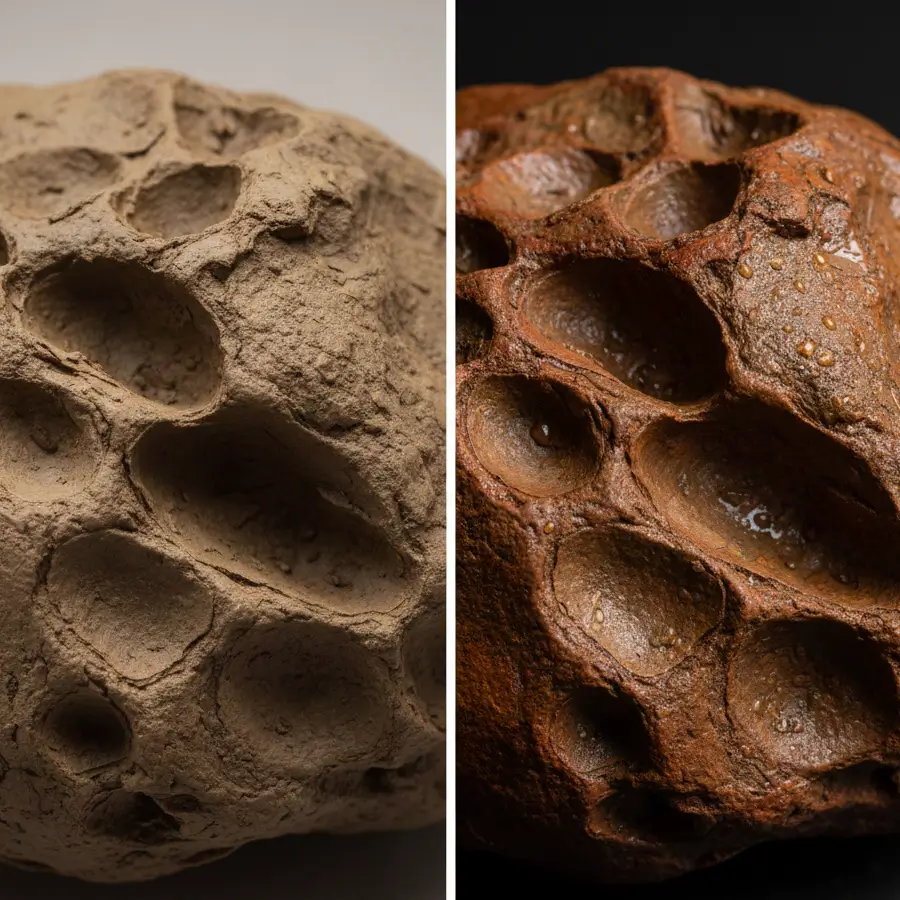
Dragon vs. Seiryu: The Snapshot
Dragon Stone (Ohko Stone) is a clay-based sedimentary rock that is chemically inert, meaning it will not alter your aquarium’s pH or hardness. It features warm earthy tones and deep crevices but requires extensive cleaning to remove packed clay. Seiryu Stone is a metamorphic limestone that aggressively leaches calcium carbonate, raising pH and kH. It is preferred for Iwagumi layouts due to its jagged texture but requires management of water parameters.
- Choose Dragon Stone if: You keep soft-water livestock (Caridina shrimp, Tetras), want zero pH alteration, or need lightweight volume.
- Choose Seiryu Stone if: You are aquascaping with hard-water fish (Guppies, Cichlids), using active buffering soil, or need that classic “miniature mountain” aesthetic.
SPECIFICATIONS: The Data Sheet
| Feature | Dragon Stone (Ohko) | Seiryu Stone (and “Ryuoh”) | My Finding |
| Chemistry | Inert (Neutral) | Reactive (Basic) | Seiryu raised kH by 4° in 2 weeks. |
| Preparation | Heavy cleaning required | Acid wash (optional) | Dragon Stone took 3x longer to prep. |
| Weight | Light/Porous | Dense/Heavy | 10lbs of Dragon = 1.5x volume of Seiryu. |
| Fragility | High (Brittle) | Low (Solid) | I broke 2 Dragon pieces just by dropping them. |
| Primary Color | Ochre, Rust, Brown | Grey, Blue-Grey, White | Seiryu darkens significantly when wet. |
| Cost (2024) | $3-5 per lb | $4-7 per lb | Dragon Stone is better value per volume. |
The Seiryu Stone Chemistry Trap (It’s Not Just Rock)
Here is the part where I get technical, because this frustrates me. People buy Seiryu for Crystal Red Shrimp setups and then wonder why they can’t keep their parameters stable.
Seiryu is essentially limestone (calcium carbonate) metamorphosed. When you put it in acidic water (pH < 7.0), it dissolves. Slowly, yes, but consistently.
My Parameters Test
I ran a 10-gallon test tank with 15lbs of “Grade A” Seiryu stone and RO water remineralized to a TDS of 130.
- Day 1: pH 6.6, kH 2, gH 5.
- Day 7: pH 7.2, kH 5, gH 8.
- Day 14: pH 7.5, kH 7, gH 11.
The Reality Check:
If you are running a high-tech planted tank with CO2, the acidity from the carbonic acid will actually accelerate this dissolution. The rock fights your CO2. I fought this for months in a Rotala farm tank before realizing that my “inert” gravel was actually fake Seiryu rubble.
How to Fix It:
You don’t “fix” it; you manage it.
- More Water Changes: I had to do 50% weekly to reset the mineral creep.
- Buffering Substrate: Use soil like ADA Aquasoil which actively pulls pH down, counteracting the rock.
- Lean into it: Keep fish that like it. My Fancy Guppies and African Cichlids thrived in the Seiryu tanks because they appreciate the mineral content.
Contradiction: Some sellers claim “Acid Washing” Seiryu makes it inert. This is a myth. Acid washing (using muriatic acid) cleans the surface and reveals the dark color/white veins, but the rock is still limestone through and through. It will still buffer your water.
MYTH vs REALITY: Dragon Stone Safety
MYTH: “Dragon Stone changes water chemistry because of the clay.”
REALITY: Real Ohko stone is chemically inert. The “clay” is just dried mud trapped in the holes.
- My Testing: 3 months in a soft-water Caridina tank. TDS rose only by 5ppm (likely dust), pH remained flat at 6.4.
- Geology: Composed of clay minerals and organic matter that have hardened; lacks the carbonate structure that dissolves in aquarium water.
Beginners often see their water turn cloudy/brown after adding Dragon Stone and assume it’s a chemical reaction. It’s not. It’s just physical dirt. If you skip the cleaning phase, your tank will look like chocolate milk for a week.
The Dragon Stone “Labor Tax” (Read Before Buying)
I love Dragon Stone. It’s the perfect material for creating depth because the scale-like texture makes small rocks look like massive cliffs. But preparing it is a nightmare.
When I bought my first 20lb box, I thought a quick rinse would suffice. I was wrong. I spent three hours with a dental pick and a high-pressure hose, and I was still digging out wet clay two months later during tank maintenance.
The “Clean” Protocol (That Actually Works)
- Soak it: Do not try to pick dry Dragon Stone. Soak it in a bucket for 24-48 hours. The hardened clay turns to mush.
- The Bamboo Skewer Method: Metal tools can scratch the soft stone. I use wooden skewers to jam into the holes and leverage out the clay plugs.
- The Drop Test: Be careful. Dragon Stone is incredibly brittle. I dropped a centerpiece stone onto concrete once, and it shattered into four unusable shards. It’s basically hardened mud; treat it like glass, not granite.
If you are setting up a low-tech planted tank, Dragon Stone is superior because it won’t mess with your nutrient uptake. But you pay for that ease with elbow grease upfront.
Which Layout Style Fits You?
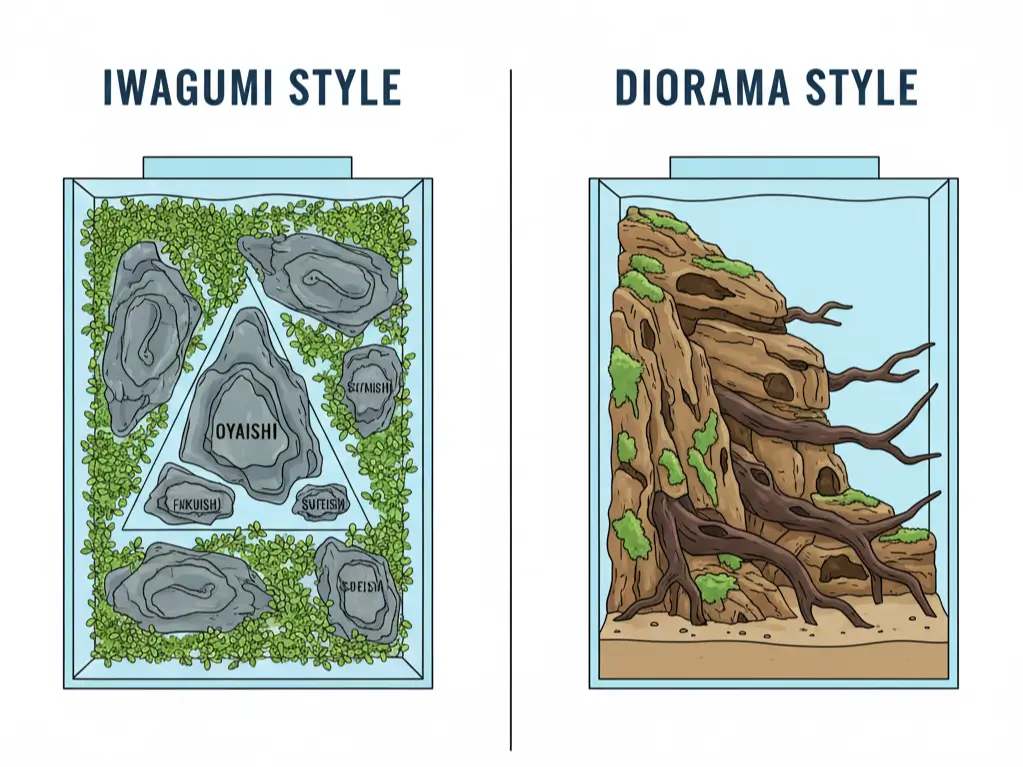
The rock dictates the scape. You can’t force a square peg into a round hole, and you can’t force Dragon Stone into an Iwagumi.
The Seiryu Iwagumi
Seiryu is the king of Iwagumi (the Japanese style of rock arrangement). Its grey/blue color contrasts perfectly with green carpets like Dwarf Baby Tears.
- Vibe: Majestic, mountainous, cold, stark.
- Best Plants: Carpeting plants, Eleocharis (Hairgrass).
- Challenge: Getting the “grains” (white calcite veins) to flow in the same direction across all your stones. It looks chaotic if the lines don’t match.
The Dragon Stone Nature Style
Dragon Stone works best in Nature Aquarium or “Diorama” styles. Its warm oranges and browns look incredible with wood.
- Vibe: Ancient, eroded, warm, welcoming.
- Best Plants: Anubias Nana Petite (wedged in crevices), Bucephalandra, Mosses.
- Benefit: You can easily break it with a hammer to create small “rubble” for detailing. Seiryu is too hard to break precisely.
Price and “Fake” Rocks
Here is a tip that saved me money: Weight to Volume Ratio.
Dragon Stone is full of holes and made of lighter clay. Seiryu is dense rock.
- 10 lbs of Dragon Stone = Fills a 5-gallon bucket nicely.
- 10 lbs of Seiryu Stone = Looks like three lonely rocks.
If you are on a budget, Dragon Stone goes much further. However, beware of “Black Seiryu” or “Ryuoh Stone.” In the trade, “Seiryu” (which is technically illegal to export from parts of Japan now) is often substituted with “Ryuoh” stone. They look 95% identical and behave chemically the same. Don’t overpay for “Authentic Seiryu” unless you are a collector; the generic grey limestone behaves exactly the same.
Also, be careful with “Acid Washed” pricing. Shops charge a premium for acid-washed Seiryu. You can do this yourself with a $10 bottle of muriatic acid from a hardware store, just wear gloves and goggles, and do it outside. I saved about $40 on my last hardscape by washing it myself.
The Final Verdict
I run both stones in my gallery, but they serve different masters.
If I’m building a high-tech planted tank with difficult red plants like Rotala Rotundifolia where I need absolute control over water chemistry, I avoid Seiryu. The constant battle against rising kH isn’t worth the aesthetic.
However, for a simple, stunning layout with hardy fish or Neocaridina shrimp? Seiryu wins on texture every time.
If you decide to go the Dragon Stone route, just buy extra glue. Because it’s so brittle, I often glue smaller pieces together to make large structures. It’s actually fun, like aquatic LEGOs.
Ultimately, the choice between Dragon Stone and Seiryu Stone comes down to how much maintenance you want to do: do you want to work hard cleaning the stone before the tank starts (Dragon), or do you want to manage water chemistry after the tank is running (Seiryu)?
Choose your struggle.