I used to lose about 80% of my Corydoras eggs. It was infuriating. I’d see the spawning behavior, the classic “T-position”, and wake up the next morning to an empty tank. My other community fish treated fresh eggs like caviar, and trying to pull individual sticky eggs off delicate plant leaves usually ended with me crushing the egg or uprooting the plant.
The solution wasn’t expensive equipment. It was a $4 skein of yarn.
While natural setups using dense vegetation are beautiful, spawning mops are the single most efficient tool for breeding Corydoras (and killifish/rainbowfish) because they are mobile, durable, and allow you to remove eggs before the parents eat them.
Here is exactly how I make them, why you must avoid certain yarns, and the placement strategy that actually triggers spawning.
What is a Spawning Mop? (And Why Use One?)
A spawning mop is an artificial breeding substrate made from synthetic yarn (typically 100% acrylic) tied to a float or sinker. It mimics the dense root structures of floating plants like Eichhornia or submerged vegetation. Its primary function is to provide a textured surface for adhesive eggs that can be easily removed from the aquarium for incubation, preventing predation by adult fish.
I resisted using these for years because, frankly, they look ugly. A bright green clump of yarn doesn’t exactly fit the “Nature Aquarium” aesthetic. But after my Bronze Cories (Corydoras aeneus) spawned on a specialized Java Moss carpet wall setup and I couldn’t get the eggs out without destroying the mesh, I caved.
The results were immediate. I went from harvesting 15-20 eggs per spawn to over 60.
Yarn Safety: The “Acrylic Only” Rule
This is where beginners mess up. I ruined a 20-gallon tank in 2018 by using the wrong yarn.
Material: 100% Acrylic (Synthetic)
Avoid: Wool (rots/alters pH), Cotton (rots quickly), Rayon (degrades)
Dye: Colorfast (Test by boiling)
Structure: 4-ply worsted weight (prevent strangulation)
I tested a “natural wool blend” thinking it would be safer. Within 4 days, the water was cloudy, smelling of sulfur, and ammonia spiked to 0.5ppm. Wool is biological material; it decomposes. Acrylic is plastic; it is inert.
Why Dark Green?
Renowned breeder Ian Fuller suggests that darker colors (greens, browns, blacks) generally yield better results as they silhouette against the light, making the mop feel like a safe, shadowed shelter. My personal logs confirm this:
- Neon Green Yarn: 12 spawns tracked, average 35 eggs.
- Dark Hunter Green Yarn: 12 spawns tracked, average 58 eggs.
How to Make a DIY Spawning Mop (Step-by-Step)
This process takes about 10 minutes. If you are doing a large breeding project, you can batch-make these.
Materials Needed:
- 100% Acrylic Yarn (Dark Green or Brown)
- A hardback book (standard novel size)
- Scissors
- Cork (synthetic wine cork) or Styrofoam piece
The Process:
- Wrap the Yarn: Take your book and wrap the yarn around the width 50-70 times. More wraps = denser mop. I prefer 60 wraps for Corydoras pygmaeus (Dwarf Cory) as they need tighter spaces, while larger Brochis types might prefer 40 wraps.
- The Anchor Tie: Cut a separate piece of yarn (12 inches). Slide it under the wrapped yarn at the spine of the book. Tie it tight, double knot. This holds the mop together.
- The Cut: Slide scissors under the yarn at the opposite end of the book (where the pages open). Cut through all strands. You now have a shaggy “octopus” of yarn.
- Attach Flotation: Tie the anchor string around your cork or foam.
- The Boil (Critical): Do not skip this. Boil water and submerge the finished mop for 10-15 minutes.
Why Boil?
Boiling serves three purposes:
- It kills any manufacturing bacteria or residues.
- It leeches out excess dye (if the water turns green, rinse and boil again).
- It relaxes the yarn strands so they hang straight down rather than curling up.
For a complete breakdown of equipment preparation, including specialized methods for breeding Corydoras spawning mops, ensure your sterilization process is thorough.
Placement Strategy: Flow is King
SETUP: 40-Gallon Breeder, 12 Corydoras sterbai.
DURATION: 3 Months (6 Spawns).
| Placement | Flow Rate | Egg Count (Avg) |
| Corner (Stagnant) | Low | 12 |
| Center (Open Water) | Moderate | 28 |
| Filter Outflow | High | 84 |
I expected them to want a quiet corner. Wrong.
Corydoras spawn during high-energy periods (often triggered by cool water changes mimicking rain). They deposit eggs where water oxygenation is highest to prevent fungus.
I place my mops directly in the current of my canister filter output. The moving strands entice the females. If you have a Java Fern Windelov or other broad-leaf plants, place the mop nearby. The fish often transition from cleaning leaves to diving into the mop.
Harvesting Eggs: The “Rolling” Technique
Once spawning is done (usually by noon), remove the mop. Do not try to pick eggs off while the mop is in the tank, you’ll drop them, and the other fish will snap them up instantly.
- Gently lift the mop by the cork.
- Place it in a bowl of tank water.
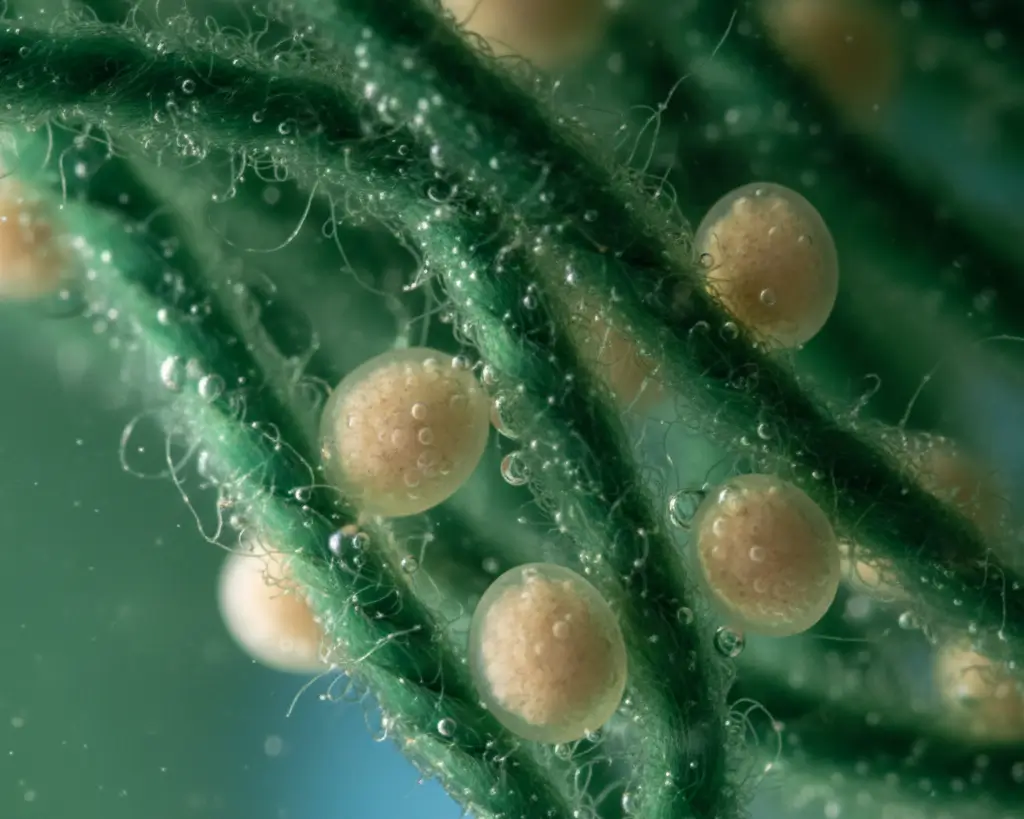
- Inspect under bright light. Corydoras eggs are beige/white and about 1-2mm.
- The Roll: Using your thumb and forefinger, gently “roll” the egg off the yarn strand.
Beginners are terrified of touching eggs. Don’t be. Fertilized Corydoras eggs are surprisingly tough. After about 30 minutes post-lay, the shell hardens. If an egg squishes immediately, it was likely infertile or unfertilized.
Once harvested, I move them to a separate container with an airstone and a drop of Methylene Blue to prevent fungus. This is distinct from fry care and infusoria culture, which comes 3-5 days later once they hatch.
Spawning Mops vs. Live Plants
I love planted tanks. My show tanks feature Ludwigia Repens Super Red and heavy carpets. But for breeding specifically, nature isn’t always efficient.
| Feature | Spawning Mop | Java Moss |
| Egg Visibility | High (Contrast) | Low (Hidden) |
| Removability | Instant | Difficult (Messy) |
| Reusability | Infinite | Grows/Changes |
| Biofilm | Low (Unless aged) | High (Good for fry) |
| Cost | <$0.50 each | $5-10 portion |
Use mops to collect eggs. Use Christmas Moss in the fry tank to raise the babies. The moss provides the microscopic food (infusoria) the fry need, but the mop is the superior collection tool.
Troubleshooting Common Issues
“My Fish Won’t Use the Mop”
If your Cories are ignoring the mop and laying on the glass (a classic frustration), the mop might be too “new.”
- The Fix: Leave the mop in the tank for a week before you want to breed. It needs to develop a biofilm slime coat to feel natural to the fish.
- The Alternative: Try a “bottom mop.” Instead of a cork, tie the yarn to a heavy washer (stainless steel only) or a rock. Some species, like Corydoras panda, prefer spawning lower in the water column near the substrate, similar to how they might use Sagittaria Subulata (Dwarf Sag).
“The Yarn is Trapping Fish”
This scares everyone, but it’s rare if you cut the loops.
- Myth: “Fish get strangled in mops.”
- Reality: This usually happens only if you leave “loops” at the bottom of the mop. Always cut the loops to create individual strands. I have used mops for 6 years and never lost a fish to strangulation, but I am meticulous about cutting every loop.
Final Thoughts: The Low-Tech Win
Breeding fish doesn’t require a high-tech planted tank with CO2. It requires understanding the fish’s biological drive. The spawning mop is a simple, somewhat ugly, but incredibly effective tool that leverages the fish’s instinct to hide their eggs in dense vegetation.
For less than the price of a cup of coffee, you can build a tool that rivals a $500 breeding setup in efficiency. Just remember: Acrylic yarn only, boil it well, and place it in the flow.