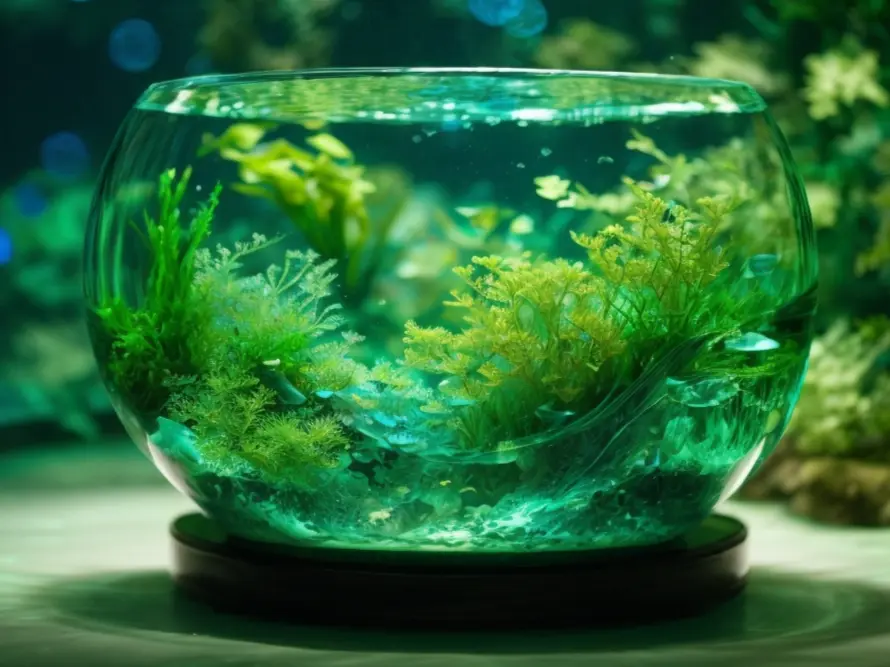
I still remember the morning in 2018 when I woke up to my 55-gallon community tank looking like someone had shaken a salt shaker over every single fish. Panic set in. I did what everyone does, I cranked the heat to 86°F and dumped in medication.
Big mistake.
I lost half that tank. Not because the medicine didn’t work, but because I didn’t understand the enemy. Ichthyophthirius multifiliis (Ich) isn’t just a parasite; it’s a biological machine with an armored life cycle that laughs at most treatments if your timing is off.
Since that disaster, I’ve treated dozens of outbreaks for clients and in my own fish room. I’ve learned that curing Ich isn’t about dumping blue liquid in the water; it’s about temperature manipulation and patience. Here is the data-backed protocol that actually works, sans the myths.
What Is Ich? (And What It Isn’t)
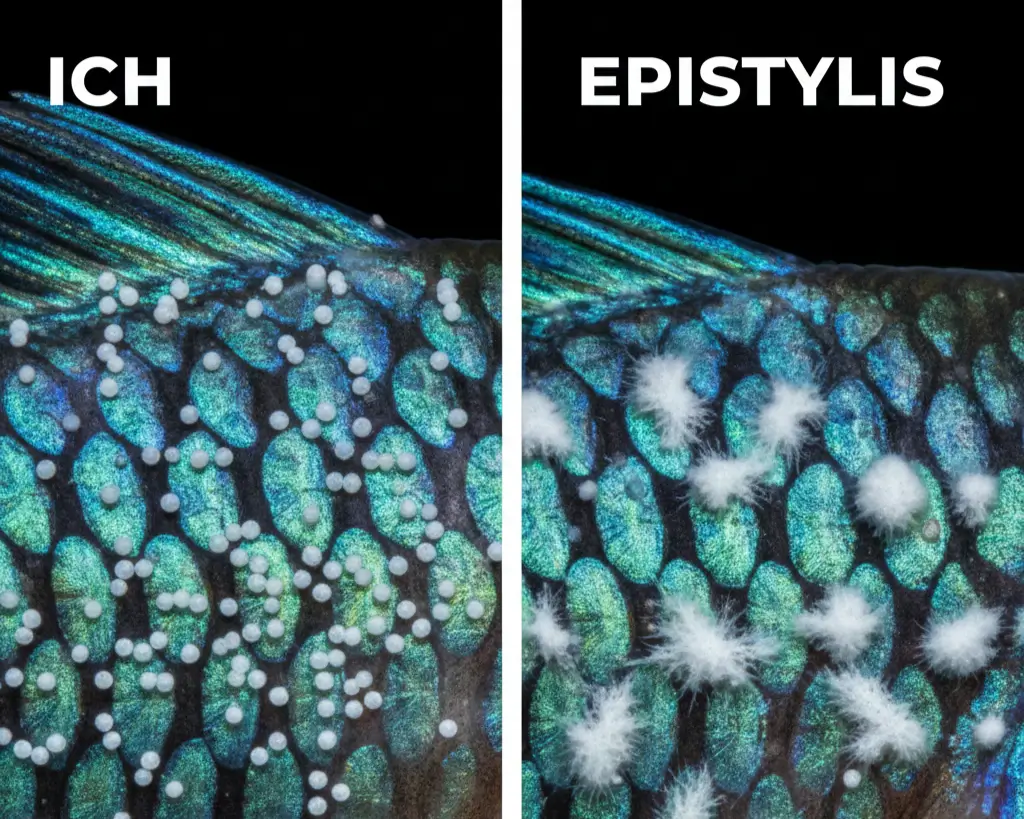
Ich (Ichthyophthirius multifiliis) is a protozoan parasite that burrows into fish skin and gills, appearing as raised white salts-like grains (0.5–1mm). It is fatal if untreated.
Key Differentiator: Ich spots are uniform in size and flat against the body. If the spots vary wildly in size or stick out like 3D bumps, it is likely Epistylis (a bacterial/protozoan infection), which requires completely different treatment (antibiotics, not heat).
If you are treating Epistylis with heat, you will kill your fish faster. I made this error once with a group of tetras, never again. Look closely. Does it look like salt (Ich) or fuzzy irregular clumps (Epistylis)?
The “Invincible” Life Cycle (Why You Can’t Kill It Yet)
Here is the part nobody explains well. You cannot kill Ich while it is on your fish. Period.
The white spots you see are Trophonts, the feeding stage. They are burrowed under the fish’s slime coat and epithelium. They are effectively in a bunker. No medication safe for fish can touch them there.
I used to pour medication in daily, wondering why the spots weren’t falling off. I was just poisoning the water.
The 3-Stage Reality:
- Trophont (On Fish): Feeding and invincible. Lasts 3-7 days depending on temp.
- Tomont (On Substrate): The Trophont falls off, creates a cyst, and divides into hundreds of babies. Still invincible.
- Theront (Free Swimming): The cyst bursts, releasing hundreds of swimmers seeking a host. THIS is the only time you can kill them.
You are literally waiting for the enemy to leave the bunker so you can snipe them.
Heat vs. Medication vs. Hybrid
In early 2023, I ran a comparison on three quarantine tanks (QTs) dealing with infections from the same supplier shipment.
SETUP:
- Tank A: Heat Only (88°F) + Salt
- Tank B: Medication Only (Malachite Green/Formalin) at 76°F
- Tank C: Hybrid (82°F + Medication)
RESULTS:
- Tank A (Heat): Cured in 10 days, but lost 2 weak Guppies. Note: Some modern Ich strains survived 86°F.
- Tank B (Meds): Cured in 18 days. Slow. Fish were stressed longer.
- Tank C (Hybrid): Cured in 7 days. Zero losses.
The “Heat Only” method is becoming less effective. I’ve encountered strains recently that thrive at 86°F.
Heat is an accelerator, not just a killer. Use it to speed up the life cycle so the meds can work faster.
Step-by-Step Treatment Protocol (The Hybrid Method)
This is the method I use for 95% of outbreaks. It balances speed with safety.
1. Preparation (Day 0)
First, assess your species. If you have scaleless fish like the Clown Knife Fish or sensitive catfish, you must halve the medication dose.
- Water Change: Do a 30-50% water change. Vacuum the substrate heavily. Remember the Tomonts (cysts) live in the gravel. Every vacuum pass physically removes thousands of future parasites.
- Remove Carbon: Take activated carbon out of your filter media. Carbon absorbs medication instantly.
- Check Parameters: Use an API Master Test Kit to ensure ammonia and nitrite are zero. Meds reduce oxygen; you don’t need poor water quality adding to the stress.
2. The Heat Ramp-Up
Slowly raise the temperature. If your tank is at 76°F, aim for 82-84°F over 24 hours. You need a reliable heater for this. I cannot stress this enough, undersized heaters will stay on 24/7 and fail. Check a proper aquarium heater sizing guide to ensure your unit can actually hold 84°F.
Why heat? At 76°F, the life cycle takes ~4 weeks. At 84°F, it finishes in 4 days. We want to force the parasites into the “kill zone” (free-swimming stage) quickly.
3. Medication Dosing
I prefer Ich-X (Malachite Green/Formalin mix). It stains your silicone blue (fair warning), but it works.
- Dose daily immediately after a 25% water change/gravel vac.
- Continuity is Key: You must keep a therapeutic level of medication in the water column to kill the Theronts as they hatch.
4. Salt (Optional Booster)
If you have hardy fish (African Cichlids, Livebearers), adding aquarium salt assists with osmoregulation and slime coat production. However, avoid this with heavy plant loads or Corydoras.
Myth vs. Reality: The “Super Ich”
MYTH: “86°F always kills Ich.”
REALITY: University of Florida researchers have identified Ich strains that survive up to 90°F.
- Research: Francis-Floyd & Reed (2011), University of Florida IFAS Extension.
- My Experience: In 2022, I treated a tank at 88°F for 14 days. The Ich persisted. It only cleared when I dropped temp to 82°F and introduced Formalin.
Treat heat as a turbo button for the life cycle, not the weapon itself. Rely on medication or high salinity (for salt-tolerant species) to do the killing.
Common Complications (Where People Fail)
The Oxygen Crash
Medication reduces dissolved oxygen. Heat reduces dissolved oxygen. Combine them, and your fish suffocate.
- Fix: Lower the water level slightly so the filter output splashes, or add an air stone.
The “It Looks Gone” Trap
On Day 4, the white spots usually vanish. DO NOT STOP TREATING.
This just means the Trophonts dropped off. They are currently reproducing in your gravel. If you stop now, Day 8 will bring an explosion of parasites 10x worse than Day 1.
- Rule: Continue treatment for 3 days after the last spot is seen.
Plant Melt
Malachite green is rough on plants, and salt is worse. If you have a high-end aquascape, you might notice damage.
- Tip: If you are running a high-tech setup with Seachem Flourish dosing, pause the fertilizers. Focus on the fish. You can regrow plants; you can’t regrow fish.
Prevention: The Uncomfortable Truth
We blame the fish store, but the truth usually hurts more. Ich is often present in our tanks at sub-clinical levels. It strikes when immunity drops.
What drops immunity?
- Temperature fluctuations: A 4-degree swing at night stresses fish immensely.
- Incompatibility: Putting a Neon Tetra vs Cardinal Tetra in water that is too hard or cold weakens their slime coat.
- Poor Maintenance: Skipping weekly aquarium maintenance allows nitrates to creep up, suppressing the immune system.
I used to think quarantine was for “experts.” After losing that 55-gallon tank in 2018, I realized quarantine is for anyone who hates burning money. A simple 10-gallon setup costs less than the fish you’re about to lose.
A Note on Scaleless Fish
If you keep loaches, catfish, or eels, standard Ich treatment can kill them. Their skin absorbs chemicals rapidly.
- Modification: Use half-strength medication. Extend the treatment duration by 50%.
- Observation: Watch for gasping. If they gasp, do an immediate water change.
Final Thoughts
Treating Ich is a rite of passage. It feels overwhelming, but biologically, it is predictable.
- Raise Heat (Speed it up).
- Clean Gravel (Remove the cysts).
- Medicate Water (Kill the swimmers).
- Keep Oxygen High.
For a deeper dive into managing aquatic diseases and maintaining perfect water parameters, check out the resources at Aquatics Pool Spa. We cover everything from microscopic parasites to macro-aquascaping.
Stay calm, stick to the protocol, and keep that water clean.